



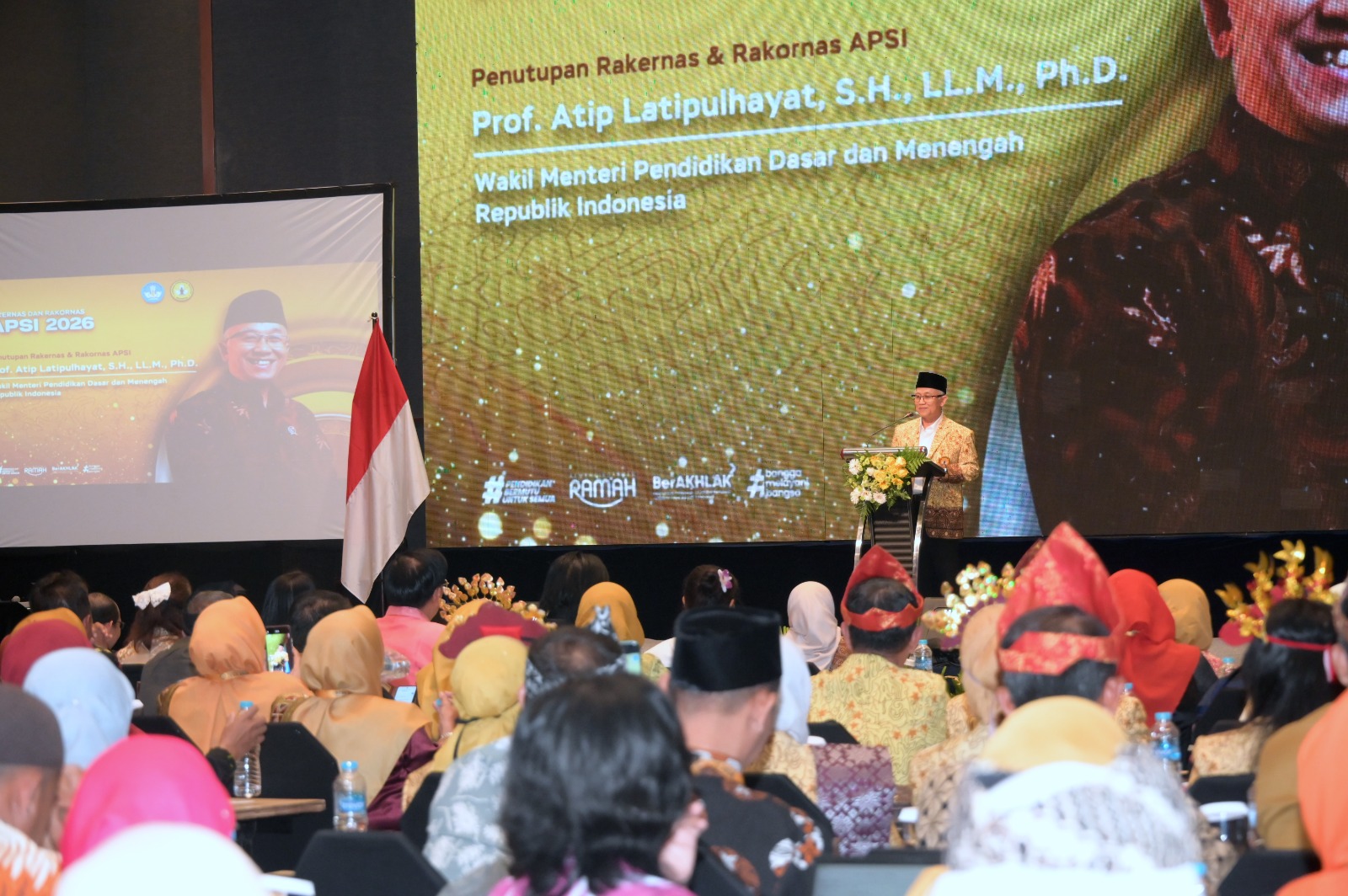
Surabaya, October 15, 2026 – School supervision is not just about checking administrative completeness. More importantly, it's about ensuring that educational policies truly impact learning activities in schools. Everything from the principal's leadership style, the teachers' teaching abilities, to the students' learning experiences, all require attention.
This was conveyed by the Deputy Minister of Primary and Secondary Education (Wamendikdasmen), Atip Latipulhayat, at the closing of the 2026 National Working Meeting (Rakernas) of the Indonesian School Supervisors Association (APSI) in Surabaya, East Java, on Wednesday (10/14). "On behalf of the Ministry of Primary and Secondary Education, I express my appreciation and gratitude to APSI and all parties who have contributed to this activity. School supervisors are the guardians of quality and the liaison between government policies and actual practices in educational units," he said.

He stated that the success of education policies cannot be measured solely by the issuance of regulations or the implementation of programs. The results must be evident in school management and the learning process. Therefore, supervisors need to engage more with schools to find solutions and implement improvements, not just identify deficiencies.
Deputy Minister Atip also emphasized the importance of data utilization in carrying out supervisory functions. The Basic Education Data (Dapodik) and Education Report Cards can help supervisors understand school conditions and determine the type of assistance needed. This data needs to be interpreted in light of the situation on the ground so that improvement measures don't stop at administrative requirements. "A culture of quality isn't formed in a single visit or activity. It grows through habits that are maintained and evaluated continuously," he said.
The Chairman of APSI, Agus Sukoco, also urged school supervisors to continue learning and improving their professionalism. He stated that supervisors must be role models for principals and teachers, while also helping them perform their duties better. This role requires continuous competency development to ensure supervision aligns with national education goals.

Deputy Minister Atip also highlighted the development of digital technology and artificial intelligence (AI), which pose new challenges for the world of education. Supervisors need to possess adequate data and digital literacy to assist teachers in utilizing technology. The use of AI also requires a critical approach in examining information and assessing its suitability for learning needs.
Despite the increasing use of technology in schools, the role of teachers remains irreplaceable. Teachers not only deliver material but also guide students, inspire them, and shape their character. Supervisors can help schools ensure that the use of technology continues to support these goals.
The 2026 APSI National Working Meeting raised the theme "Strengthening the Managerial and Academic Quality Culture of School Supervisors Through Monitoring, Assessment, and Coaching." Through this forum, supervisors are expected to apply the results of the discussions in mentoring practices in their respective regions, according to the needs and conditions of educational units.*** (Author: Rona Uly, Editor: Destya, Seno. Photographer: Morecka)

Bureau of Communication and Public Relations
Secretariat General
Ministry of Primary and Secondary Education
Website: kemendikdasmen.go.id
X: x.com/Kemdikdasmen
Instagram: instagram.com/kemendikdasmen
Facebook: facebook.com/kemendikdasmen
YouTube: Ministry of Education and Culture
Questions and Complaints: ult.kemendikdasmen.go.id
Press Release from the Ministry of Primary and Secondary Education: kemendikdasmen.go.id/pencarian/siaran-pers
#QualityEducationforAll
#MinistryOfEducationAndEducationFriendly