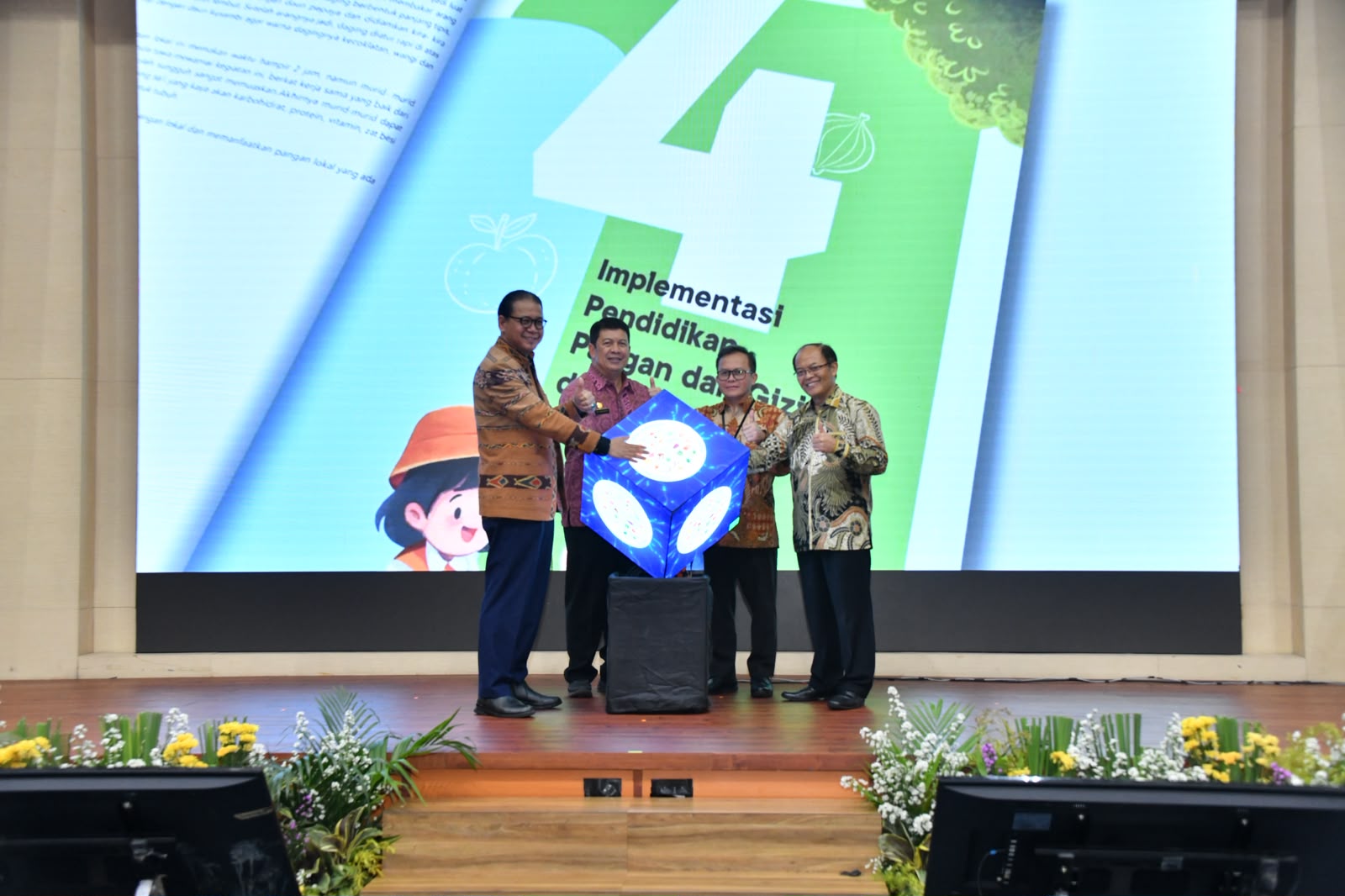



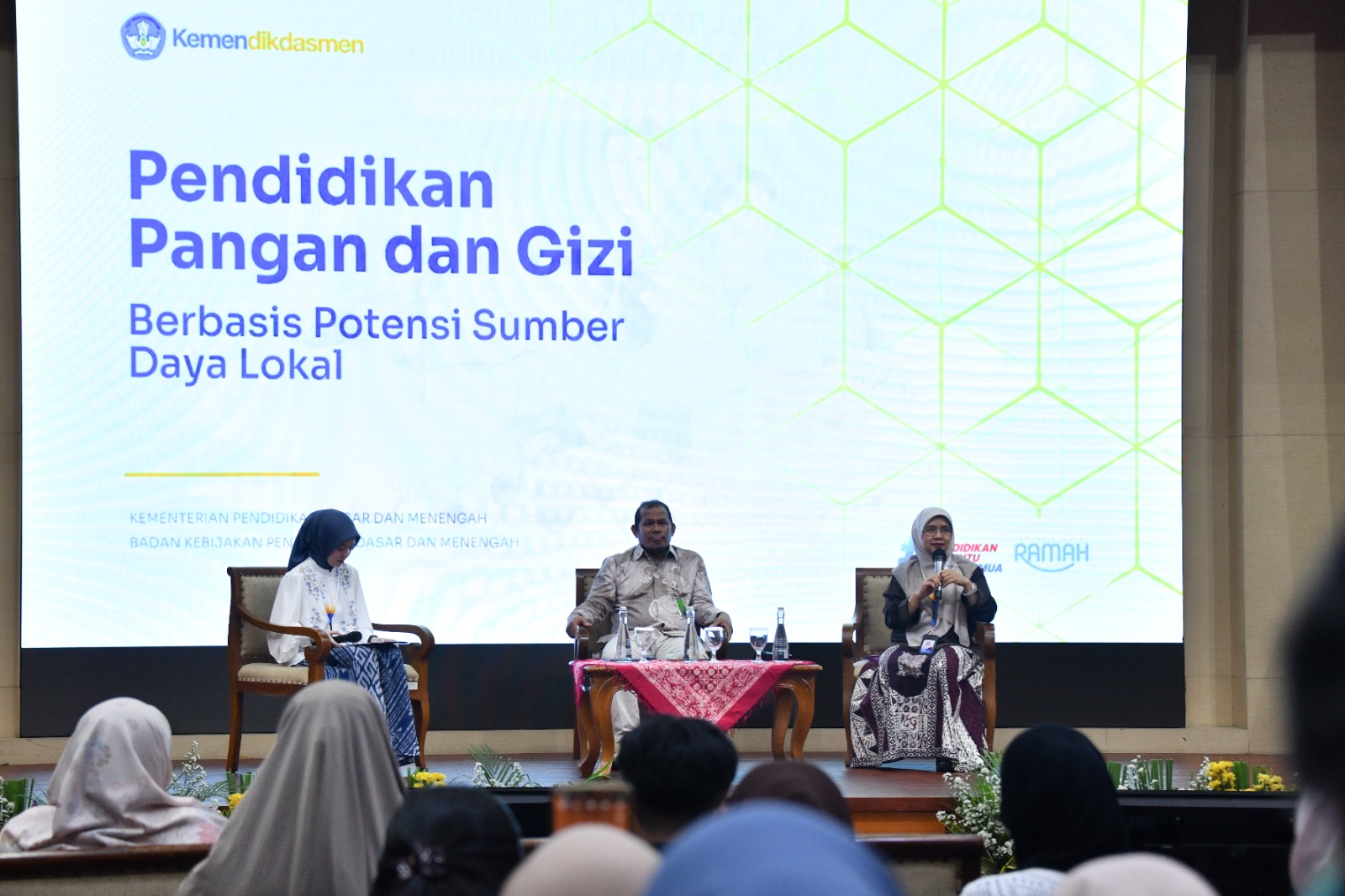
Jakarta, October 15, 2026 - The Ministry of Primary and Secondary Education (Kemendikdasmen), through the Primary and Secondary Education Policy Agency (BKPDM), and the National Food Agency, launched a Guide to Food and Nutrition Education Based on Local Resource Potential. The launch included a talk show to discuss efforts to integrate food and nutrition education into learning and its practical application in educational units by utilizing local food potential. The event was held at the Kemendikdasmen Office on Wednesday (14/10).
The Head of the Curriculum and Learning Center, Laksmi Dewi, explained that food and nutrition education can be integrated into the existing curriculum without adding additional subjects. The developed guide is expected to help teachers incorporate food and nutrition materials into the learning process according to educational level. "The most important thing is how we incorporate this competency map into existing learning outcomes," Laksmi explained.

He further explained that this integration can be achieved through intracurricular, cocurricular, extracurricular activities, and school culture. One way to implement this is by familiarizing students with and understanding healthy foods, including through the implementation of the Free Nutritious Meals program at school. He believes that introducing local foods needs to be delivered continuously to develop healthy eating habits in students.
Hamid Sangadji, Director of Food Consumption Diversification at the National Food Agency, stated that food and nutrition education is crucial for developing healthy eating habits from an early age. Indonesia boasts diverse food resources that can be utilized to support the health and productivity of the younger generation. "What we eat will determine our future," he said.

According to him, food and nutrition education materials can cover three elements: food availability, affordability, and utilization. The material can be tailored to the student's developmental stage, from recognizing the types of food found in the surrounding environment to understanding the factors that influence food availability and affordability. He also emphasized the importance of cultivating a diverse, nutritionally balanced, and safe diet.
In a talk show session on policy perspectives, experiences, and best practices, Basuni, Head of the High School Division of the South Sumatra Provincial Education Office, also spoke as a resource person, discussing food and nutrition education practices from a local government perspective. This discussion was part of an effort to examine how food and nutrition education can be implemented in educational institutions, taking into account the potential of local resources.
Meanwhile, Hadi Sucipto, Principal of SMKN 1 Kademangan, Blitar Regency, East Java, explained his experience implementing learning that utilizes local potential. He explained the benefits of collaborative learning across disciplines, the involvement of the business and industrial sectors, and the promotion of healthy living habits within the school environment. He also explained how the school environment can support learning and introduce students to local foods.
The experience of these educational units demonstrates the importance of connecting learning to the surrounding environment so that students can recognize the potential of local foods and develop a healthy lifestyle. Food and nutrition education can also be incorporated into school learning and habituation activities.
Through the dissemination of this guide, the Ministry of Primary and Secondary Education is encouraging the ongoing implementation of food and nutrition education in educational institutions. The learning is expected to help students understand the importance of choosing diverse, nutritionally balanced, and safe foods, while also recognizing and preserving the potential of local foods in their areas.* ** (Author: Zahra / Editor: Destya, Seno / Documentation: BKPDM Team)

Bureau of Communication and Public Relations
Secretariat General
Ministry of Primary and Secondary Education
Website: kemendikdasmen.go.id
X: x.com/Kemdikdasmen
Instagram: instagram.com/kemendikdasmen
Facebook: facebook.com/kemendikdasmen
YouTube: Ministry of Education and Culture
Questions and Complaints: ult.kemendikdasmen.go.id
Press Release from the Ministry of Education and Culture: kemendikdasmen.go.id/pencarian/siaran-pers
#QualityEducationforAll
#MinistryOfEducationAndEducationFriendly