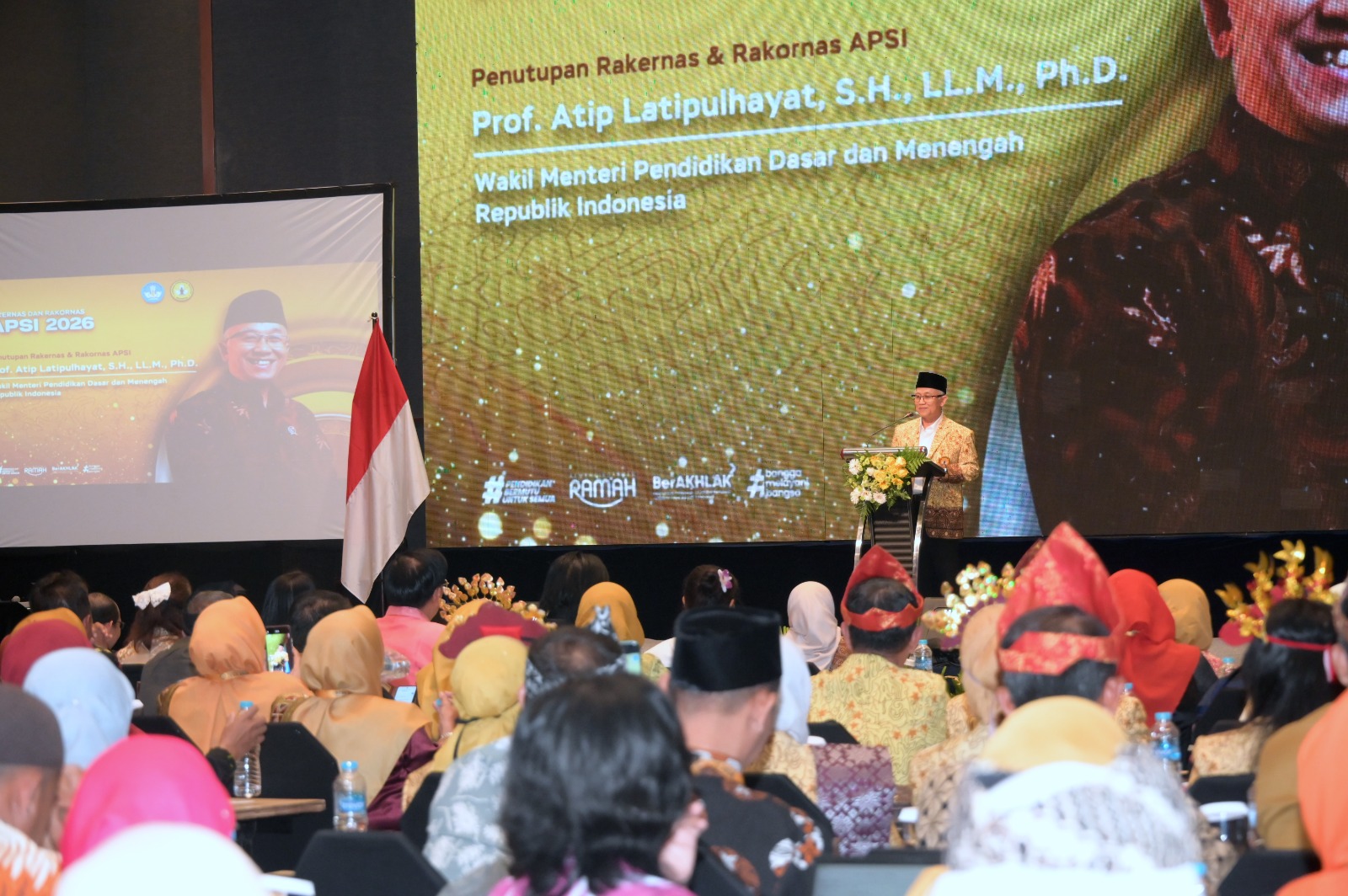




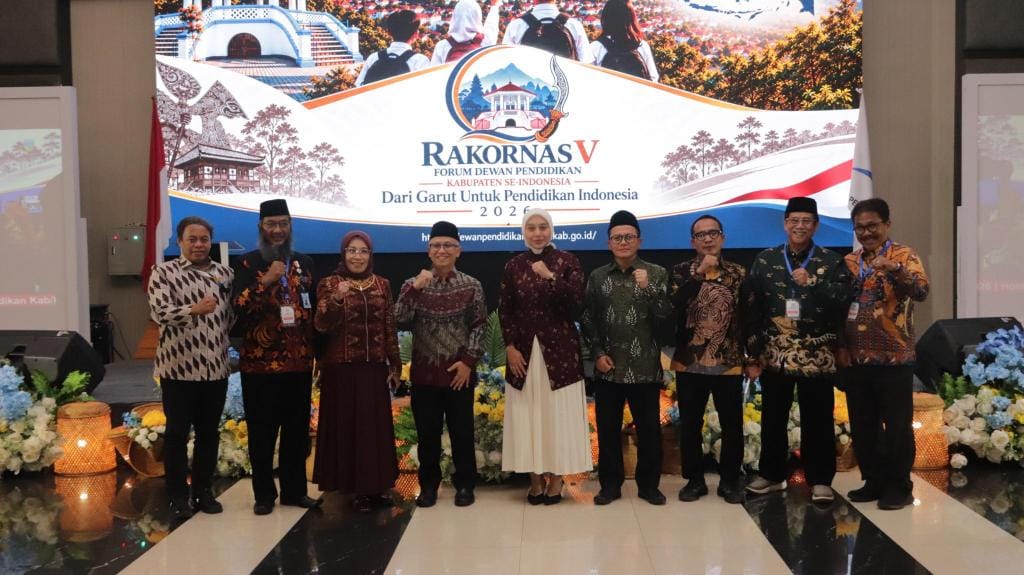
Garut Regency, West Java, October 14, 2026 — Efforts to improve national education governance require not only appropriate regulations but also contributions from regions and the community. This was the focus of Deputy Minister of Primary and Secondary Education (Wamendikdasmen) Atip Latipulhayat when opening the 5th National Coordination Meeting (Rakornas) of the Indonesian Education Council Forum (FDPI) in 2026 in Garut Regency, West Java, Tuesday (10/13). In the event, which took place on October 13–15, 2026, Atip invited the Education Council to participate constructively in the discussion of the Draft Law on the National Education System (RUU Sisdiknas).
Deputy Minister of Primary and Secondary Education Atip stated that the Education Council's primary function, as stipulated in existing laws, is to improve the quality of educational services. Therefore, the deliberations on the National Education System Bill provide a momentum to improve national education governance within a coherent framework, with the goal of achieving quality education for all through equitable access, quality improvement, and attention to educator welfare.

The National Education System Bill was drafted by combining three laws: the Law on the National Education System, the Law on Teachers and Lecturers, and the Law on Higher Education. This effort is expected to create a more integrated educational regulatory framework that supports quality education for all through equitable access, quality improvement, and attention to educator welfare.
"One very important thing, and even a prerequisite for becoming a valid law, is broad public participation, including, of course, the Education Council. This strengthens what is known as meaningful participation . Meaningful here should be interpreted as a substantive contribution, not a mere lip service to education," he said.
According to him, the revision of the National Education System Law is an initiative of the House of Representatives (DPR) which will then be discussed with the government. In this process, public participation needs to be realized through meaningful input relevant to educational needs. The role of local governments and the community, including the Education Council, is crucial to ensure that formulated policies can address various educational challenges. These include education budget allocation, teacher welfare and status certainty, improving educator competency, and technological and artificial intelligence developments that bring new challenges to the learning process. Furthermore, realigning the division of authority between the central and regional governments is also one of the issues discussed in the context of improving education quality.

Deputy Minister of Primary and Secondary Education Atip emphasized that various inputs on the National Education System Bill need to be oriented toward tangible impacts on education quality, not merely regulatory development. He urged the FDPI (Indonesian Professional and Professional Development Organization) to provide constructive input so that the deliberations on the National Education System Bill can consider the needs and challenges of education in various regions. "So, once again, please, all proposals must be oriented toward quality, not just our responsibility to create regulations. What's the point if there's no impact on education quality?" Atip said.
Meanwhile, the Chairman of the Garut Regency Education Council, Nanang Sofyan Hambali, stated that education councils at the regency and city levels need to actively participate in the drafting of the National Education System Bill. He believes such involvement is necessary to ensure that the resulting regulations truly accommodate the interests of the education sector.
"The Education Councils in the regencies/cities must not remain silent. They must participate and contribute to ensuring that the bill drafted by the DPR truly produces a bill that has real benefits for the world of education," said Nanang.
The Chairman of the Indonesian Regency/City Education Council Forum, Joko Riyanto, who was also in attendance, expressed his hope that the Education Council would remain incorporated into the National Education System Bill, both at the provincial and district/city levels. He believes the Education Council plays a crucial role in supporting educational advancement throughout Indonesia. "We hope that the bill will retain both Provincial and Regency/City Education Councils, as these Education Councils are a forum for dedicated individuals committed to advancing education throughout Indonesia," Joko said.
In addition, the Deputy Regent of Garut, Putri Karlina, highlighted the importance of access to education in breaking the chain of structural poverty.

Putri conveyed that education should be more accessible and affordable to the public. She hopes that education policies can provide broader opportunities for the public to obtain information and receive an education. "I hope this is where the government comes in to break the cycle of poverty. By providing relaxation in the education sector so that people have access to information and education more easily, affordably, and even, if possible, free," Putri said. (Author: Destya Ayu/Editor: Ririn/Seno H.)
Bureau of Communication and Public Relations
Secretariat General
Ministry of Primary and Secondary Education
Website: kemendikdasmen.go.id
X: x.com/Kemdikdasmen
Instagram: instagram.com/kemendikdasmen
Facebook: facebook.com/kemendikdasmen
YouTube: Ministry of Education and Culture
Questions and Complaints: ult.kemendikdasmen.go.id
Press Release from the Ministry of Primary and Secondary Education: kemendikdasmen.go.id/pencarian/siaran-pers
#QualityEducationforAll
#MinistryOfEducationAndEducationFriendly