



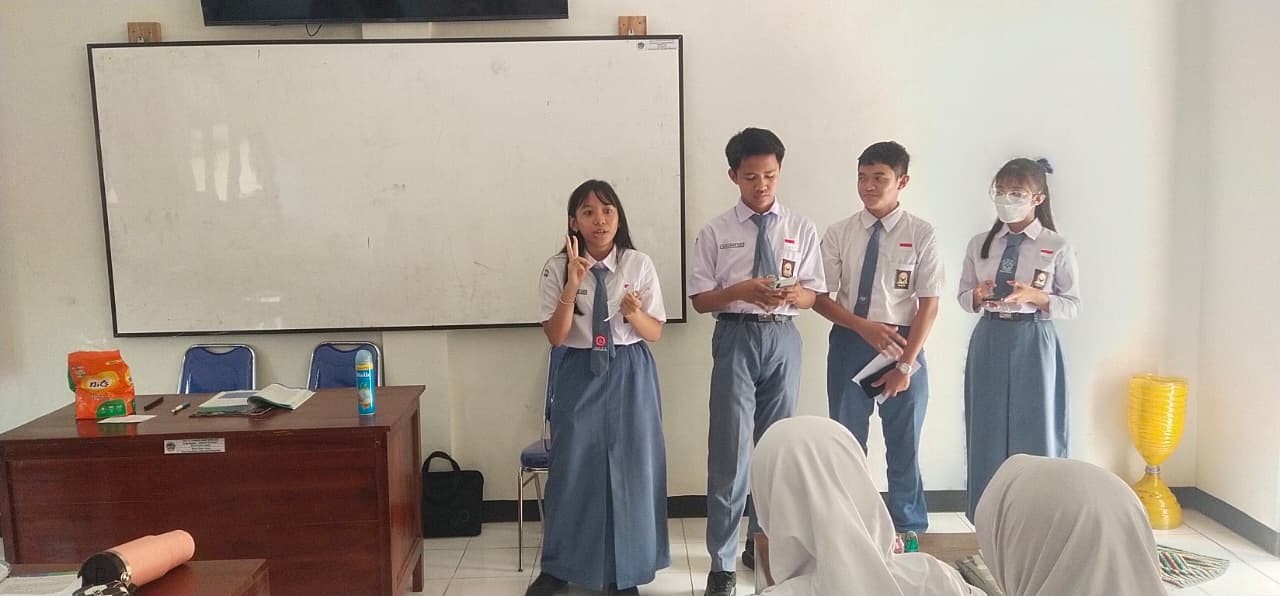
Banyumas, Ministry of Education and Culture — Informatics learning at the Integrated National School (SNT) 2 Banyumas encourages 10th-grade students to understand computational thinking through problems relevant to everyday life. Using a STEM ( Science, Technology, Engineering, and Mathematics ) approach, students analyze cases such as ATM transactions, determining graduation rates, and cashier payments using cash or QRIS. They then develop algorithms and flowcharts to design solutions to the problems.
Informatics teacher at SNT 2 Banyumas, Rudy Aziz Septyawan, said that the learning is designed so that students not only understand the concepts, but are also able to express ideas and design solutions systematically.
"Informatics learning is not only aimed at ensuring students understand concepts, but also at enabling them to systematically design solutions to problems," said Rudy.
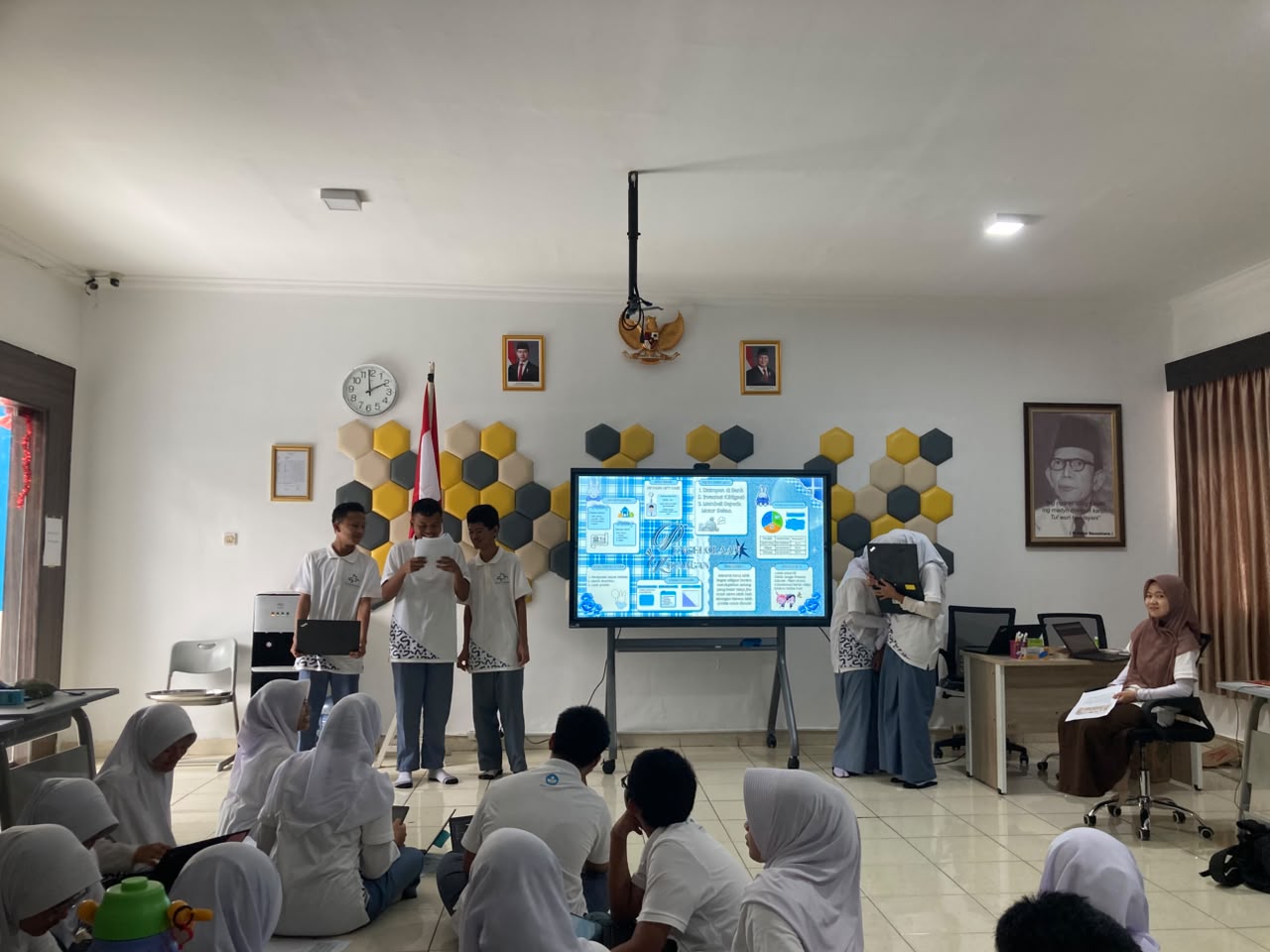
Learning takes place in five meetings, starting from building learning readiness, understanding program solution design using pseudocode , working on Student Worksheets (LKPD), compiling presentation materials, to presenting results and obtaining feedback from teachers and peers.

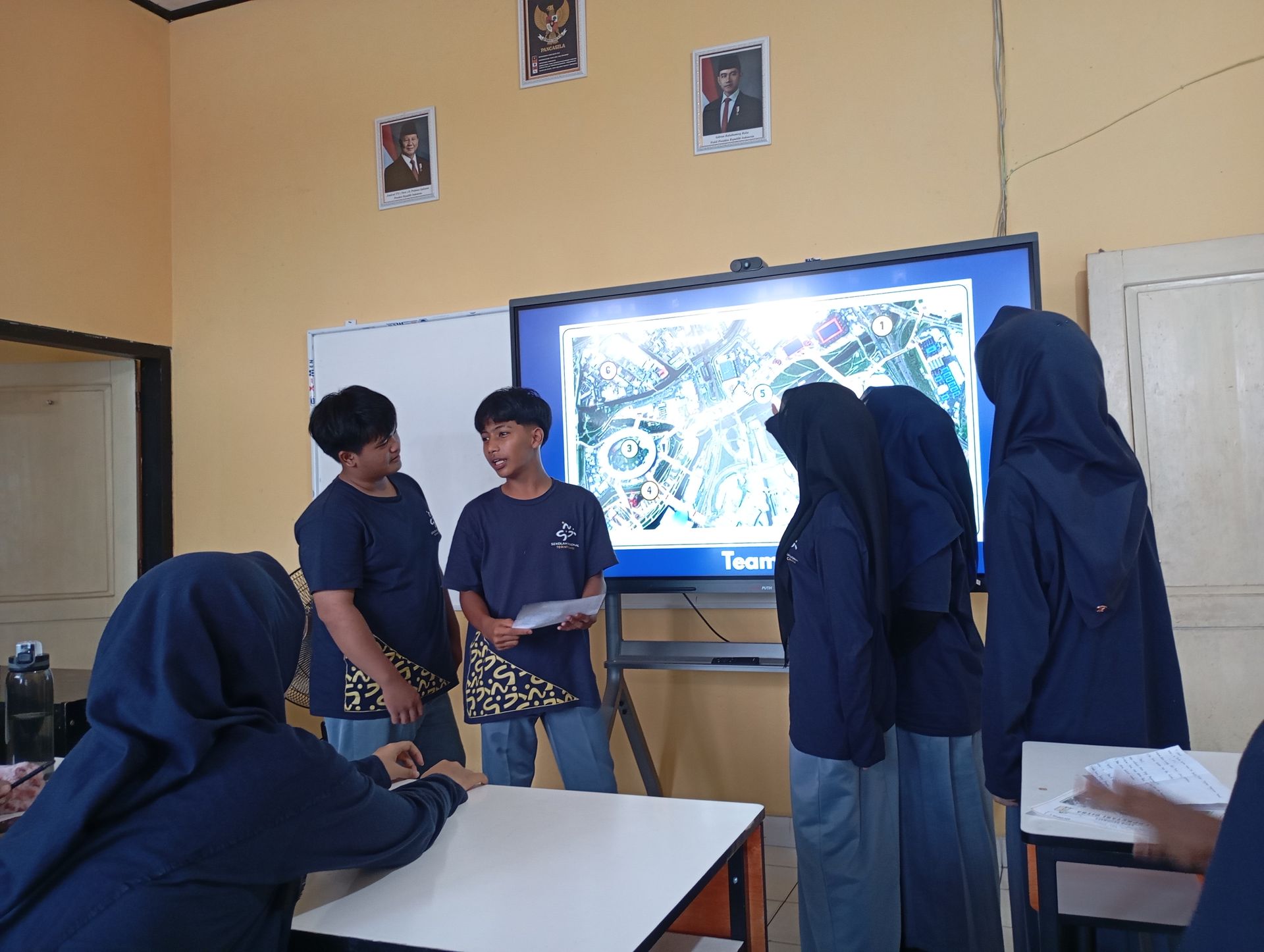
One of the student worksheets (LKPD) used the example of withdrawing cash from an ATM. Students worked in groups to identify Input, Process, and Output (IPO), then developed algorithms and flowcharts . Jahfal Rafif Azmi, a 10th-grade student at SNT 2 Banyumas, said the activity helped him understand how a system works logically and structured.
“My favorite part was grouping the Input, Process, and Output components, and completing the analysis table,” Jahfal said.
During the process, Jahfal's group discovered that the ATM system required precise sequences, including PIN verification before deducting from the customer's balance. They addressed these challenges through group discussions, reviewing the material on the Digital Interactive Board (PID) and the Ruang Murid platform, and then collectively refining the design.

In another LKPD, students designed algorithms for determining student graduation and payment transactions at minimarket cashiers using cash or QRIS. Ardell Liandra Putri and her group analyzed the structure of an IPO, developed an algorithm using natural language from start to finish , and then illustrated it in flowchart form.
According to Ardell, the activity helped him understand the importance of sequentially constructing algorithms. When he encountered difficulties in creating clear and unambiguous natural language, his group reread the draft, shortening overly long sentences and replacing them with more systematic instructions.
"The benefits are enormous for training our logical thinking in everyday life as well as in the basics of programming and of course it will be useful in the future because in the future we will certainly use technology," said Ardell, a 10th grade student at SNT 2 Banyumas.
The experience of working on the student worksheet (LKPD) is part of the STEM learning process, encouraging students to understand problems, develop problem-solving steps, and systematically design solutions. In the process, students utilize digital learning media such as PID and Ruang Murid, as well as pseudocode , LKPD, and flowcharts to develop solution designs.

Through this series of activities, Rudy observed the development of students' abilities in logical and systematic thinking, problem-solving, writing pseudocode , working independently, communicating ideas, and providing and receiving feedback. The learning process progressed from understanding concepts, designing solutions, completing student worksheets, and presenting the designs to the class.
Rudy said that student involvement throughout the entire process is a crucial part of the Informatics learning experience. "Learning becomes meaningful because students are actively involved in the learning process. They don't just receive material from the teacher, but also experience the process of designing, completing, presenting, discussing, and receiving feedback," Rudy concluded. (Author: Rayhan / Editor: Denty / Documentation: SNT 2 Banyumas Team)
Bureau of Communication and Public Relations
Secretariat General
Ministry of Primary and Secondary Education
Website: kemendikdasmen.go.id
X: x.com/Kemdikdasmen
Instagram: instagram.com/kemendikdasmen
Facebook: facebook.com/kemendikdasmen
YouTube: Ministry of Education and Culture
Questions and Complaints: ult.kemendikdasmen.go.id
Press Release from the Ministry of Primary and Secondary Education: kemendikdasmen.go.id/pencarian/siaran-pers
#QualityEducationforAll
#MinistryOfEducationAndEducationFriendly