



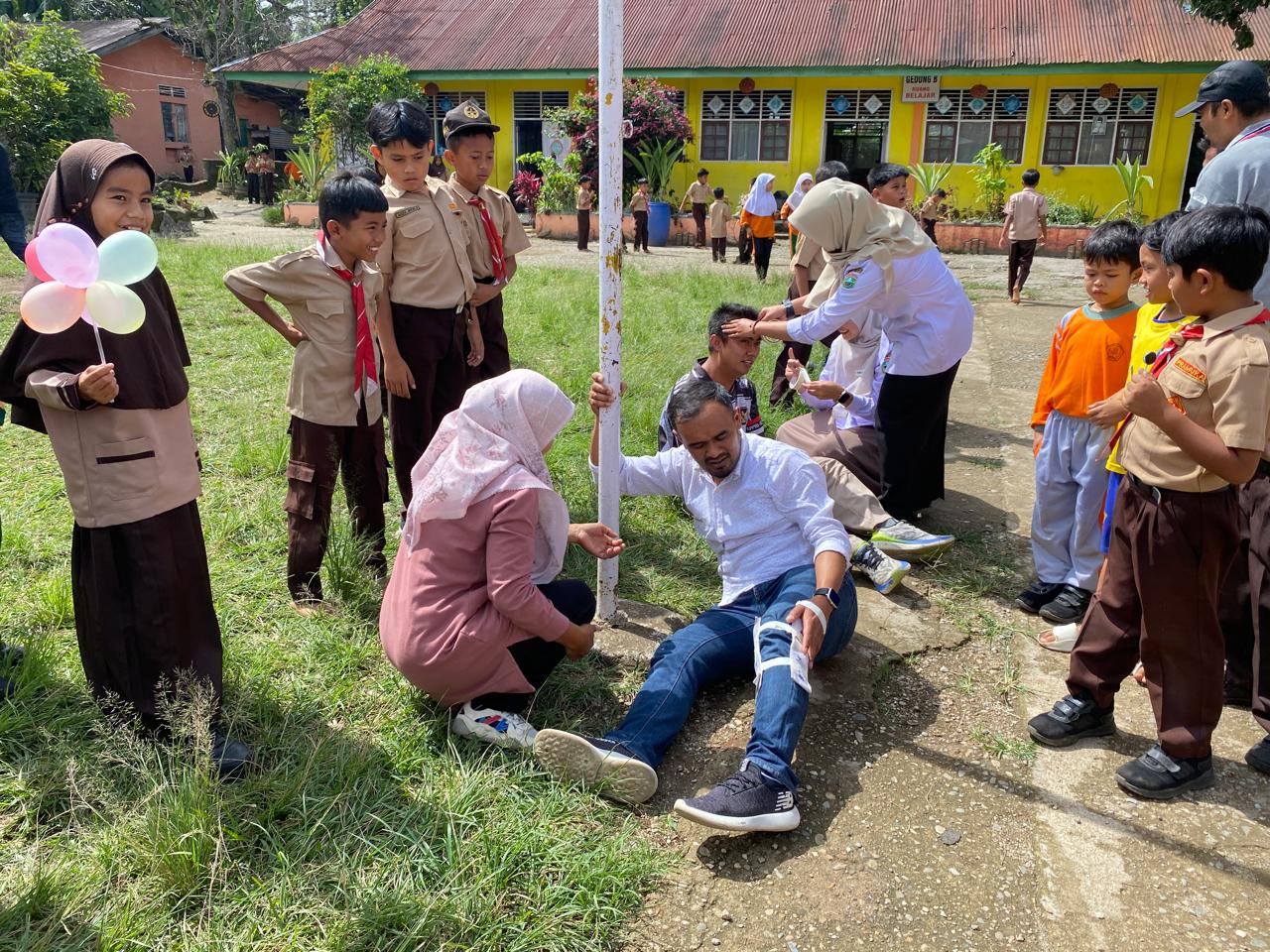
Jakarta, October 19, 2026 – To commemorate the International Day for Disaster Risk Reduction, the Ministry of Primary and Secondary Education (Kemendikdasmen) is promoting increased teacher awareness and competency in addressing disaster risks. This effort is being carried out by providing teachers with the knowledge and skills needed to build preparedness within educational institutions. One way this is done is through face-to-face training for teachers and education personnel in four provinces: Aceh, North Sumatra, West Sumatra, and East Nusa Tenggara (NTT), involving the Kemendikdasmen Technical Implementation Unit (UPT).
This training covers two main topics: Disaster Preparedness for Educators and Education Personnel (PTK) and Post-Disaster Psychosocial Support Services for PTK. Through these two topics, teachers and education personnel are equipped with an understanding of the steps to take before, during, and after a disaster, from mitigation efforts and safety procedures to psychosocial support for affected school residents. Partners such as Save the Children and the Indonesian Psychological Association (HIMPSI) participated in the development of the training materials, including in the development of the learning modules.
The Director General of Teachers and Education Personnel (Dirjen GTK), Nunuk Suryani, emphasized that disaster risk awareness must be part of teachers' competencies. Preparedness must be built before a disaster occurs by strengthening knowledge, skills, and fostering safe behaviors within educational institutions.
"Teachers need to be aware that disaster risks can occur at any time and impact student safety and the continuity of learning. Therefore, teachers need to understand mitigation and preparedness measures, be able to act calmly and appropriately in emergency situations, and provide support according to students' needs. Developing disaster-aware teachers is a crucial part of realizing safe and resilient educational institutions," Nunuk said some time ago.
In his remarks at a socialization event themed "Resilient Teachers, Resilient Schools: Building Disaster Preparedness Together," Saiful Bari, Director of Early Childhood Education and Non-Formal Education (PAUD and PNF), emphasized that teachers play a strategic role in building preparedness because they interact directly with students. In emergency situations, teachers' knowledge and composure can help students understand the steps they need to take to maintain their safety.
"A resilient teacher not only understands safety procedures but is also able to remain calm, responsive, and take appropriate action when a disaster strikes. Preparedness needs to be built early by involving the entire school community and paying attention to the characteristics and needs of each student, including those requiring special assistance," he said.
As part of this effort, the Ministry of Elementary and Secondary Education, through the Directorate General of Teachers and Education Personnel, has developed a Disaster Preparedness Module and a Post-Disaster Psychosocial Support Services Module for PTK (Public Service Providers) as learning resources for teachers and education personnel. These modules are expected to help educators understand the steps necessary before, during, and after a disaster, while also applying this knowledge to the conditions and needs of educational units.

From a mitigation perspective, Rina Utami from Save the Children emphasized that preparedness isn't just about recognizing potential disasters. Schools also need to ensure that everyone understands safety procedures and is able to implement them in emergency situations.
"Disaster preparedness isn't just about knowing the potential risks; it also requires an understanding of the steps needed to protect oneself and the school community. Teachers need to ensure that evacuation routes, assembly points, and safety procedures are understood by the entire school community and that they are regularly trained. Preparedness also requires addressing the needs of each student, including those requiring special assistance, so that no one is left behind when an emergency occurs," said Rina.
In addition to ensuring proper safety procedures, schools need to prepare emergency supplies, including disaster preparedness bags. These bags can contain essentials, such as drinking water, non-perishable food, personal medications, lighting, communication devices, and important documents. These supplies should be checked regularly to ensure they are ready for use when needed. Disaster preparedness also includes ensuring the psychological recovery of the school community after a disaster.
Yuria Ekalitani of the Indonesian Psychological Association emphasized the importance of Psychosocial Support Services (PSS), not only for students but also for teachers affected by the disaster. "Teachers are not only helpers, but also individuals in need of assistance. Psychosocial Support Services need to ensure that teachers who accompany students also have the opportunity to be supported. Teachers affected by the disaster need support and space to recover so they can return to their roles effectively," Yuria said.
Nur Fajar Amalia, a teacher at SMK Negeri 1 Meulaboh, Aceh, said that disaster preparedness training helped the school understand that risk awareness needs to be accompanied by a clear action plan. "After participating in the training, we understand more clearly that simply knowing about disaster risks is not enough. We also need to know what to do when a disaster occurs. The first step we took at the school was to form a disaster preparedness team involving the principal, teachers, school committee, students, and parents," said Nur Fajar.
Linggana Tesya, a teacher at SMAN 1 Candung, Agam Regency, West Sumatra, said that the potential for disasters in her area, including earthquakes and volcanic eruptions, encourages schools to improve disaster education and equip teachers with adequate knowledge before providing assistance to students. "For us, it is important to equip ourselves first before providing assistance to students. Understanding the risks of earthquakes and volcanic eruptions helps teachers prepare the right steps and provide the information students need to maintain safety," said Linggana.
Through face-to-face training and the development of learning materials, the Ministry of Elementary and Secondary Education is promoting the development of a culture of disaster awareness in educational settings. Equipped with adequate knowledge and skills, teachers are expected to be able to protect students, assist affected school communities, and maintain the continuity of learning throughout the post-disaster recovery process. (Author & Documentation: GTK Team / Editor: Destya, Seno)
Bureau of Communication and Public Relations
Secretariat General
Ministry of Primary and Secondary Education
Website: kemendikdasmen.go.id
X: x.com/Kemdikdasmen
Instagram: instagram.com/kemendikdasmen
Facebook: facebook.com/kemendikdasmen
YouTube: Ministry of Education and Culture
Questions and Complaints: ult.kemendikdasmen.go.id/pencarian/siaran-pers
#QualityEducationforAll
#MinistryOfEducationAndEducationFriendly