



Find information about the Ministry of Education and Culture, organizational structure, and regulations.
Profile Information of Kementerian Pendidikan Dasar dan Menengah
Public Information of Kementerian Pendidikan Dasar dan Menengah
Find news, press releases, announcements, and official documentation from Kemendikdasmen
 Home
Profile
Home
Profile
Find information about the Ministry of Education and Culture, organizational structure, and regulations.
About Us
Profile Information of Kementerian Pendidikan Dasar dan Menengah
Profiles of Officials
Public Information
Public Information of Kementerian Pendidikan Dasar dan Menengah
LHKPN Report
Laporan Moch. Abduh
Laporan LHKPN Fajar Riza Ul Haq
Laporan LHKPN Atip Latipulhayat
Laporan LHKPN Suharti
Laporan Abdul Mu'ti
Laporan Faisal Syahrul
Laporan Nunuk Suryani
Laporan Gogot Suharwoto
Laporan Tatang Muttaqin
Laporan Toni Toharudin
Laporan Hafidz Muksin
Laporan Biyanto
Laporan Mariman Darto
Laporan Didik Suhardi
Laporan Muhammad Muchlas Rowi
Laporan Ma'ruf
Laporan Rita Pranawati
Publication
Find news, press releases, announcements, and official documentation from Kemendikdasmen
PPID
Utilizing PIP in the Regions Strengthens Equitable Access and Supports 13-Year Compulsory Education


Published on: 11 Februari 2026
Share:
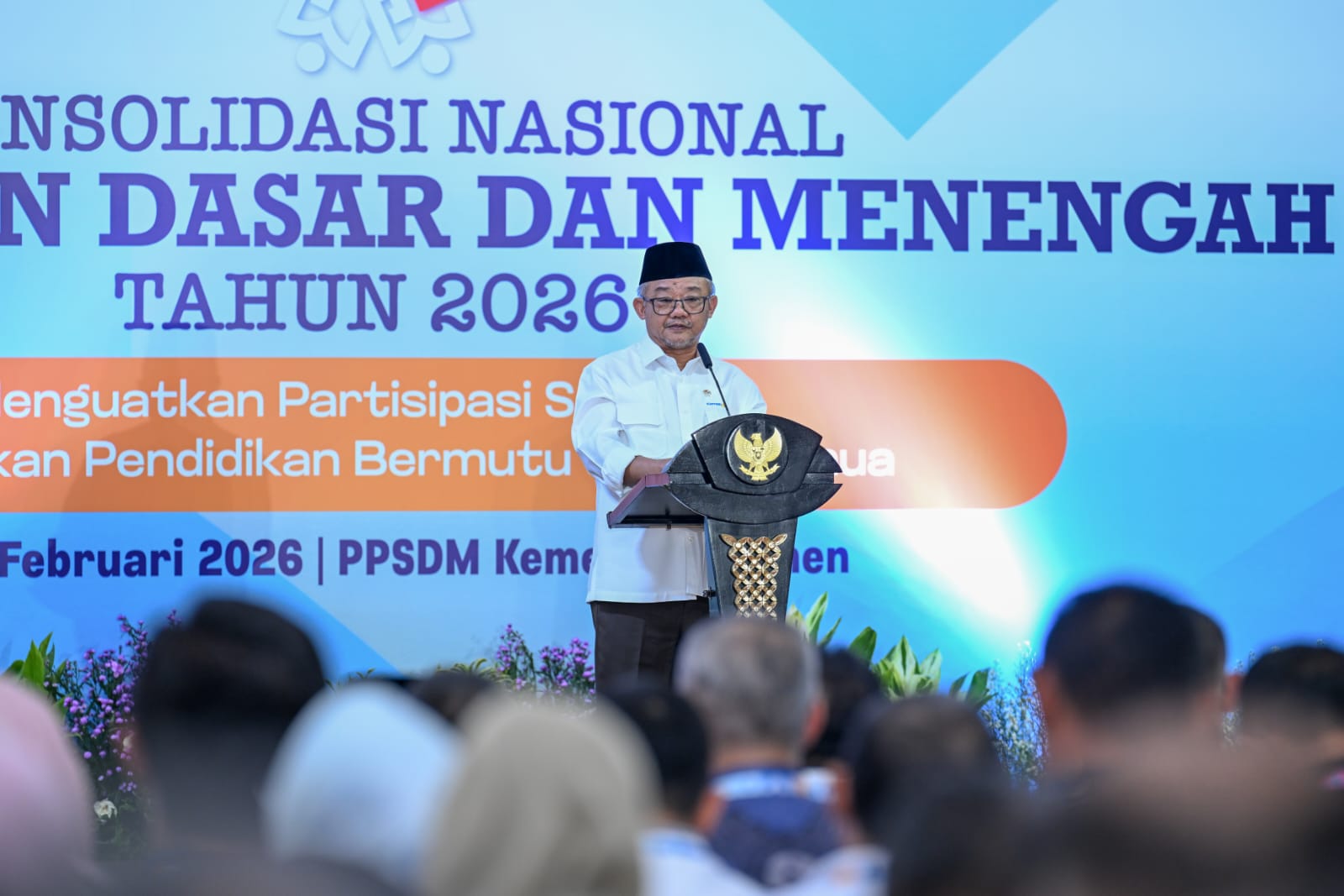
Depok, West Java, February 11, 2026 — The government continues to strengthen equitable access to education and the 13-Year Compulsory Education Program, one of which is through the Smart Indonesia Program (PIP) as a support instrument for students from low-income families. This commitment was emphasized by the Minister of Primary and Secondary Education (Mendikdasmen), Abdul Mu'ti, at the 2026 National Consolidation of Primary and Secondary Education in Depok on Monday (February 9). "Specifically to strengthen learning, under the 13-Year Compulsory Education Program, we will gradually strive to build at least one kindergarten per village. To strengthen this, starting in 2026, we will distribute assistance from the Smart Indonesia Program (PIP) to 450,000 kindergarten students per year, targeting 888,000 kindergarten students across Indonesia," said Minister Mu'ti. Benefits of PIP in Various Regions This policy serves as the foundation for strengthening the utilization of PIP in the regions, particularly in supporting equitable access to early childhood education. In various regions, PIP has directly benefited educational institutions, teachers, and students, promoting school sustainability and increasing the learning participation of children from low-income families. The Head of the Indramayu Regency Education and Culture Office, Caridin, explained that PIP monitoring is carried out through cross-government coordination down to the village level. "In overseeing the PIP program in Indramayu Regency, we consistently coordinate and collaborate with the local government, village governments, and sub-district governments. We even take reports from the public to ensure that eligible individuals actually receive assistance," said Caridin. He added that his team is actively following up on community reports regarding potential PIP beneficiaries. He believes PIP has a real impact on families facing financial constraints in educating their children. "We frequently receive reports from the community, and we then deploy teachers and school operators to identify PIP recipients based on village data. With PIP, schools' needs can be met, ensuring the continuity of children's education," he said. Meanwhile, the Head of the Tasikmalaya Regency Education and Culture Office, Wandi Herpiandi, stated that his region still faces challenges in terms of average years of schooling. Therefore, the utilization of the PIP program is being strengthened through the active role of school principals and teachers in assisting beneficiary parents. "Each time PIP disbursement is due, the school gathers parents and explains that PIP funds are for children's learning needs, not for other purposes," he explained. Wande hopes that the PIP recipient population can continue to expand through ongoing data updating and validation. This will hopefully increase the average length of schooling in Tasikmalaya Regency. Mentoring practices are also being implemented in geographically challenging areas such as Kayong Utara Regency, West Kalimantan. The Head of the Kayong Utara Regency Education Office, Jumadi Gading, stated that PIP monitoring is carried out collaboratively, involving school principals, the inspectorate, and education monitors. "We gathered all the principals of PIP recipient schools and provided guidance to ensure that the recipients were truly targeted," he said. According to Jumadi, PIP assistance is used to meet students' learning needs that haven't been met, such as shoes, bags, and stationery. "When school needs are met, children no longer feel inferior. Their self-confidence and enthusiasm for learning increase," he added. From the educational unit perspective, the Principal of Mitra Inalum Private High School, North Sumatra, assessed PIP as a strategic program in preventing school dropout rates, especially in coastal areas. "PIP is not just financial assistance; it can also shift students' mindsets. Children who previously considered school a low priority are now re-motivated to continue their education," explained Mardimpu. He added that the presence of PIP has resulted in increased student attendance and self-confidence. "With PIP, children feel equal to their peers," he said. According to him, the successful utilization of PIP is inseparable from the synergy of various parties, including the Ministry of Primary and Secondary Education. "Collaboration between schools, parents, and the government makes the utilization of PIP transparent and accountable," he concluded.*** (Author: Destya / Editor: Stephanie, Seno / Documentation: BKHM Team)

Source: Siaran Pers Kementerian Pendidikan Dasar dan Menengah Nomor: 113/sipers/A6/II/2026
Writer: Destya
Editor: Denty Anugrahmawaty
 PaudDikdasmen