



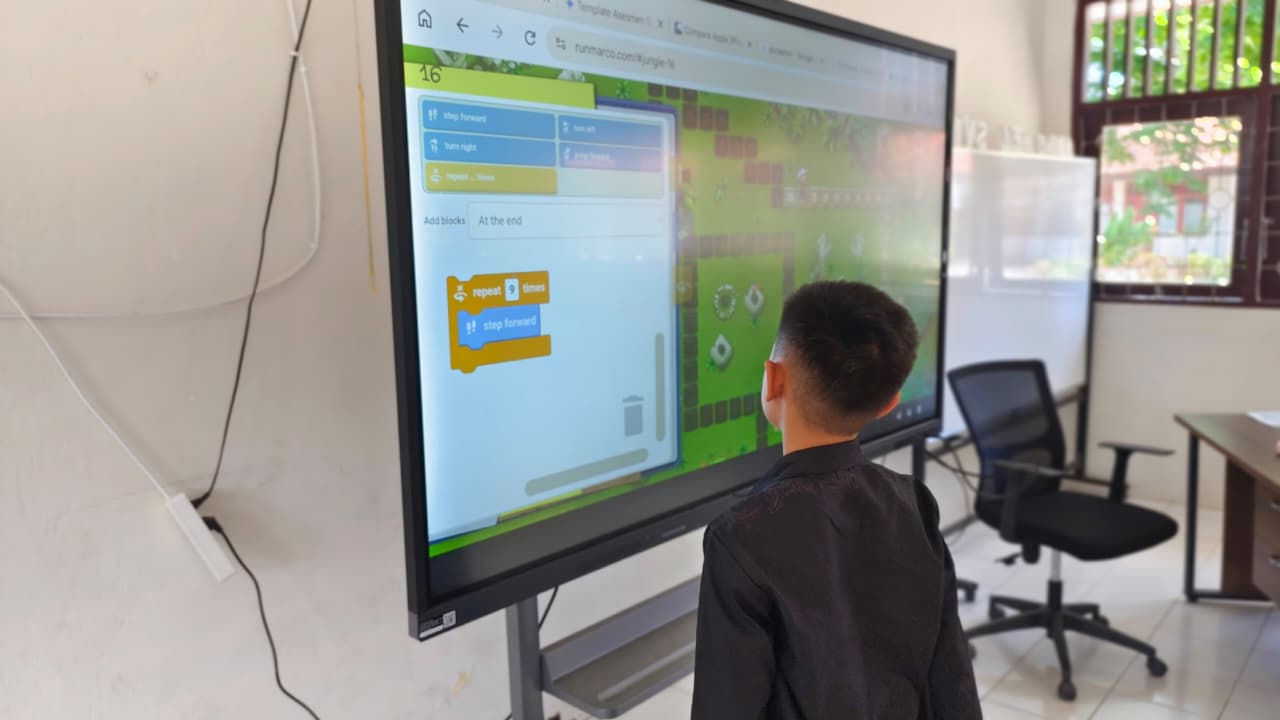
Kupang, East Nusa Tenggara, October 7, 2026 — At Integrated National School (SNT) 10 Kupang, students learn more than just from textbooks and teacher explanations. They assemble code blocks to create animations, solve logic challenges, transform written material into literacy products, and even digitize their own work. These activities are part of Science, Technology, Engineering, and Mathematics (STEM)-based learning, providing students with opportunities to experiment, collaborate, and create.
Ivan Rahas, Head of SNT 10 Kupang, stated that STEM learning is developed so that students don't stop being technology users. They need to learn to see the problems around them and find solutions using the knowledge they possess. "We see children's creativity being carried away by the patterns of their environment, where they are confined by safe and comfortable modes. Cell phones are one of the disruptors of children's creativity. They become technology users and rarely seek solutions," he said.
In learning, teachers primarily act as discussion partners, while students are given space to develop ideas and navigate their own processes. "Children are encouraged to examine everyday problems at school, at home, and in their surroundings. They then seek solutions using the knowledge they've learned in class. Teachers position themselves as discussion partners, and students act as executors, thinking, acting, and finding solutions, all the way to production," he said.

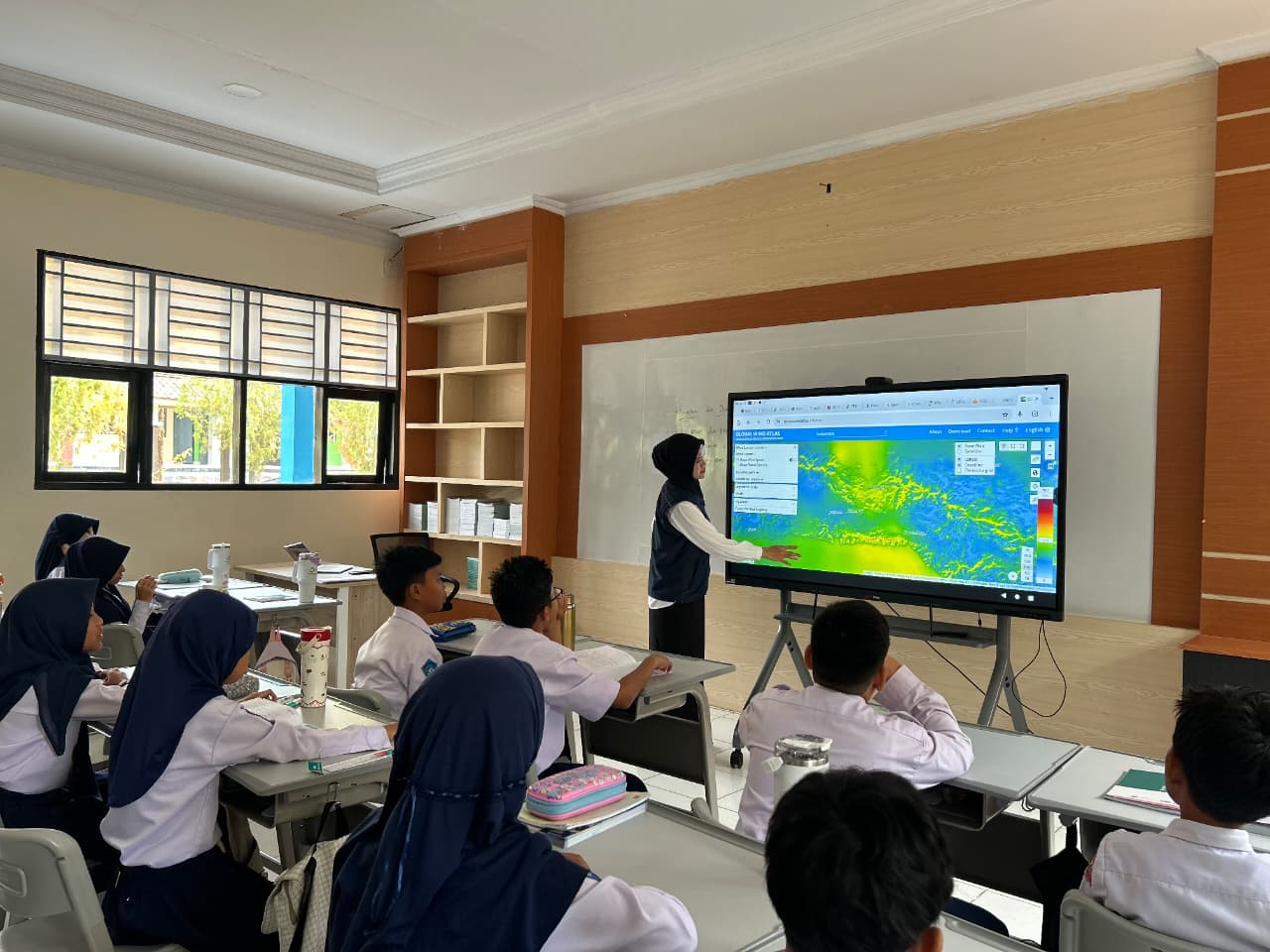
One such practice is implemented by Maulana Sulthoni, an Informatics teacher and coding, artificial intelligence, and robotics tutor. Because not all students have personal laptops, learning is conducted in small groups using Interactive Flat Panels (IFPs)/Interactive Digital Boards (PIDs) as the center of activity.
For middle school students, Maulana uses RunMarco and PictoBlox to introduce block-based programming. Students compose commands, create animations, and solve logic challenges. When a program doesn't work, they aren't immediately told the answer. "If there's an error, I ask them to think about the error, detail by detail. We review it together, and then I explain it," Maulana said.

This learning method gets students used to facing mistakes as part of the process. Maulana saw this change in Yunus, a 7B grader who previously tended to avoid learning activities. "After the interactive IFP and games , he excelled. He turned out to be very good at logical coding using the RunMarco game ," he said.
This use of IFPs is part of the government's policy to expand access to technology in learning. President Prabowo Subianto stated that the government has distributed IFPs to schools across Indonesia. According to the President, this technology will provide teachers and students with broader access to the curriculum and learning content, allowing them to access it whenever needed. At SNT 10 Kupang, the technology is being used not only to present material but also as part of the students' learning process and discovery.

Marisa Margaretha Leleuly, a 7th-grade student at SNT 10 Kupang, experienced the process firsthand. Before trying coding in IFP, she and her friends first compiled the flow of code blocks in a book. When the animation didn't work, they were asked to reread the sequence of commands until they found the error. "The teacher didn't immediately give us the answer. We were encouraged to reread the sequence of code blocks until we found the error," Marisa said. She began to look at coding differently. The experience even made Marisa want to create a simple educational quiz game in PictoBlox to play with her friends.
"I've come to understand that giving commands to a computer must be orderly and not reversed. Previously, I thought coding was difficult because it required memorizing lots of complicated keystrokes. It turns out that by arranging colorful blocks in RunMarco and PictoBlox, the logic flow is much easier to understand," he said.
STEM practices are also applied across subjects. Seventh-grade students, for example, created literacy products through collaboration between Indonesian Language, Civics, Informatics, and Mathematics. The students then digitized their work.

For Ivan, the principal of SNT 10 Kupang, fostering students' courage to experiment and express their ideas is a key outcome of STEM learning. "This STEM model forces children, whether they like it or not, to step outside their comfort zones. I've seen their confidence increase. They're bolder in expressing their ideas and are no longer shy," he said.
Through these practices, STEM at SNT 10 Kupang goes beyond the use of technology. Students learn to connect knowledge, experiment with ideas, face mistakes, and transform ideas into works of art. This is where coding, literacy, technology, and creativity converge in a learning experience created and lived by the students themselves.*** (Author: Uly / Editor: Denty / Documentation: SNT 10 Kupang Team)

Bureau of Communication and Public Relations
Secretariat General
Ministry of Primary and Secondary Education
Website: kemendikdasmen.go.id
X: x.com/Kemdikdasmen
Instagram: instagram.com/kemendikdasmen
Facebook: facebook.com/kemendikdasmen
YouTube: Ministry of Education and Culture
Questions and Complaints: ult.kemendikdasmen.go.id
Press Release from the Ministry of Primary and Secondary Education: kemendikdasmen.go.id/pencarian/siaran-pers
#QualityEducationforAll
#MinistryOfEducationAndEducationFriendly