



Jakarta, Ministry of Education and Culture — A book may fill a shelf, but change only occurs when someone opens it, understands its contents, discusses it, and then applies that knowledge to their lives. Amidst the flood of information and the ease of artificial intelligence (AI) technology, the meaning of literacy has expanded beyond the ability to read and write.
Ganjar Harimansyah, Secretary of the Language Development and Fostering Agency at the Ministry of Primary and Secondary Education (Kemendikdasmen), stated that letters acquire meaning when humans are able to understand and apply them in their lives. "When we read, we are essentially assembling scattered letters into meaningful meaning. Then we understand how the word is interpreted, and then we apply it," he said.

For Ganjar, this process brings literacy closer to everyday life. Reading skills develop into the ability to understand meaning, connect knowledge with experience, and then take action. "Change happens when books are read, talked about, and brought to life," he said.
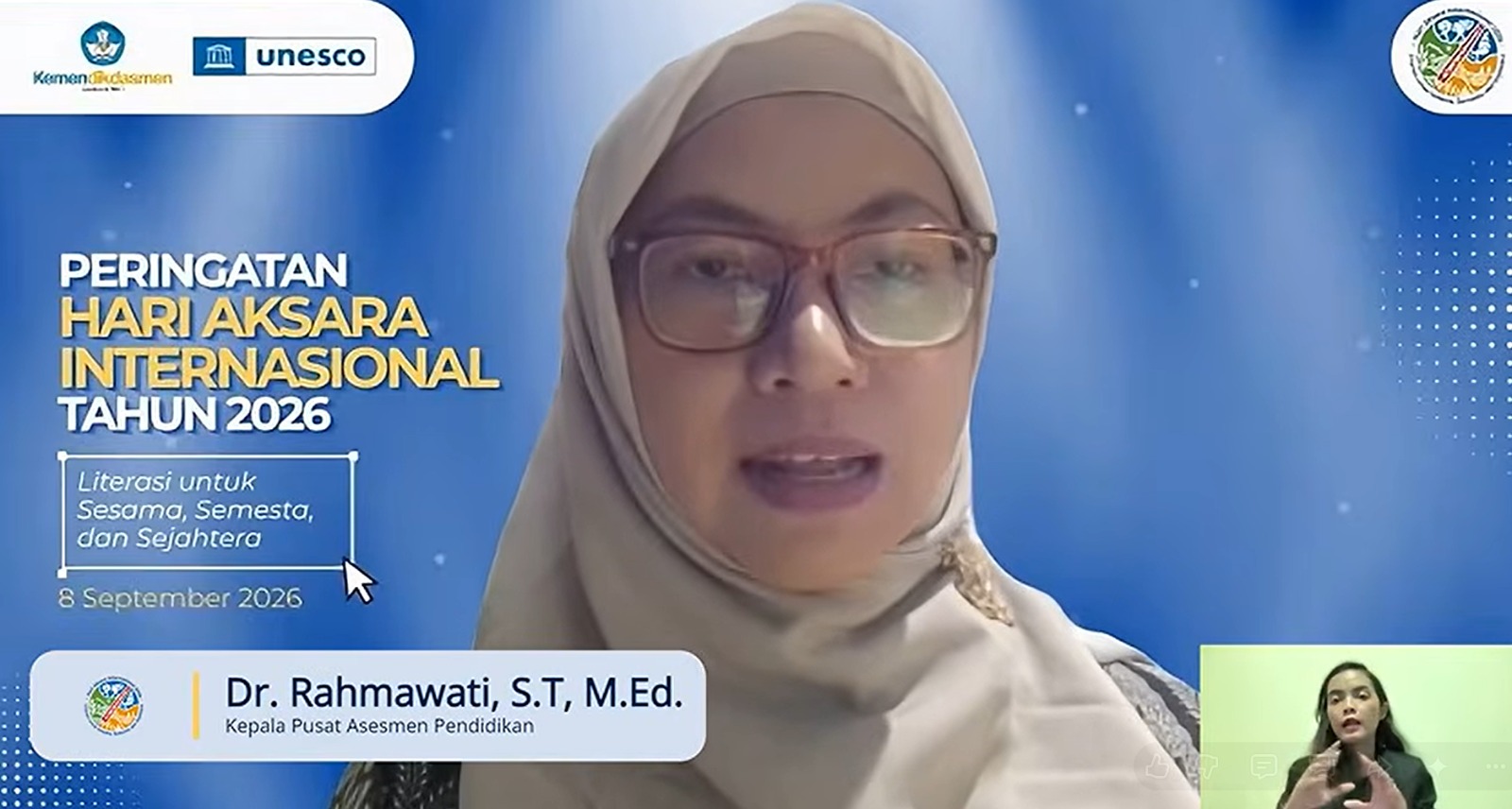
The challenge is compounded by the constant flow of information. Rahmawati, Head of the Education Assessment Center at the Ministry of Education and Culture, stated that readers need to be able to go beyond the written information. They need to interpret, integrate, evaluate, and reflect on the information before using it.
"It's not about whether we agree or disagree, but about how we are able to be literate, how we truly understand the content of the reading, both explicitly and implicitly, how we evaluate the content of the reading, and how we reflect it on our real-world lives," he said.

Gusti Agung Ketut Satrya Wibawa, Indonesia's Deputy Permanent Delegate to UNESCO, sees the challenges becoming increasingly complex in the digital space. When everyone can create and disseminate information, the ability to verify it becomes a crucial skill.
"The public not only needs to be able to ask, 'What is the content of this information?' But they also need to be able to ask, 'Who created it? Where did it come from? What's the evidence? Can it be verified?'" he said.
These three perspectives converge on the idea that literacy isn't an activity that ends when the last page of a book is closed. Literacy lives on when knowledge accompanies humans in understanding the world, sorting through information, making decisions, and taking action.
In the AI era, this capability is increasingly crucial. While information can be generated in seconds, humans still need time to understand meaning and determine what is trustworthy. Ultimately, a literate society is not just one that enjoys reading, but one that continually learns and is able to apply its knowledge to everyday life. *** (Author: Zahra/Editor: Denty)
Bureau of Communication and Public Relations
Secretariat General
Ministry of Primary and Secondary Education
Website: kemendikdasmen.go.id
X: x.com/Kemdikdasmen
Instagram: instagram.com/kemendikdasmen
Facebook: facebook.com/kemendikdasmen
YouTube: Ministry of Education and Culture
Questions and Complaints: ult.kemendikdasmen.go.id
Press Release from the Ministry of Primary and Secondary Education: kemendikdasmen.go.id/pencarian/siaran-pers
#QualityEducationforAll
#MinistryOfEducationAndEducationFriendly