



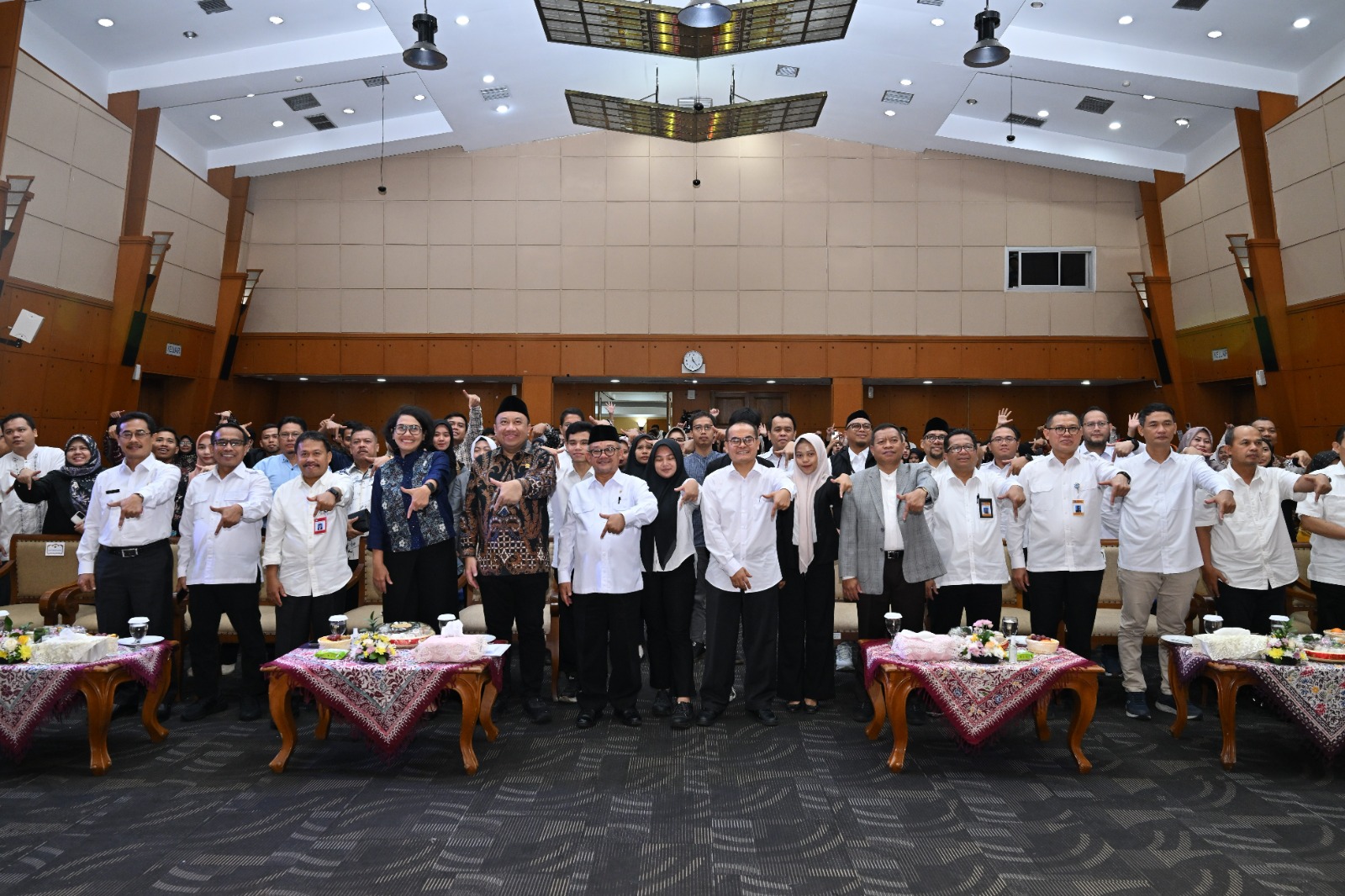
Jakarta, Ministry of Education and Culture – The Empowerment of 1,000 Vocational High School Dropouts (APS) Movement through the Vocational Skills Education (PKK) and Entrepreneurship Skills Education (PKW) Programs has been officially launched. This program marks a collaboration between the central government, regional governments, industry partners, and course and training institutions (LKP) as the implementing institutions.
This strategic move by the Ministry of Primary and Secondary Education (Kemendikdasmen) was welcomed by the West Java Regional Government. The Head of the West Java Provincial Education Office, Purwanto, who attended the launch, expressed his participation in ensuring the success of the Family Welfare Movement (PKK) and Family Welfare Movement (PKW) programs.
"As an extension of the central government, we will certainly play an active role in implementing this movement. As we know, dropouts are still our collective responsibility; they deserve the opportunity to become empowered again," explained Purwanto at the launch of the 1,000 Empowered Vocational High School APS Movement through the Family Welfare Program (PKK) and Family Welfare Program (PKW) in Jakarta on Monday (June 30).
Given the vast resources available in West Java, Purwanto also advised that PKK and PKW programs in each institution must be tailored to the potential of their respective regions. Twenty-four APS participants attended training at LKPs in various cities across West Java, including Sukabumi, Subang, Bandung, and West Bandung.
Purwanto further explained, "In line with the Minister's message, children need to develop their skills using local natural resources. This way, they will be able to capitalize on these opportunities."
In implementing the program, local governments play a role in accommodating the large number of dropouts. They also assist with training and program evaluation at various LKPs.
According to Purwanto, the PKK and PKW programs for APS also provide a new gateway for children who don't have the opportunity to complete formal education. Through the PKK program, APS will be channeled into internships and work at partner companies that have partnered with the institution. Meanwhile, in the PKW program, graduates will be mentored in starting businesses so they can develop sustainable businesses, including receiving capital in the form of financial support and business equipment.
"The opportunity is wide open, and now is the time for participants to persevere and take full advantage of this opportunity. The organizing LKP must also strive to maximize the implementation and placement of graduates," Purwanto urged.
One participant who has benefited greatly from this program is Ilham. The 18-year-old was forced to drop out of school due to financial constraints. He abandoned his dreams of a career in network technology while still in vocational school and returned to his passion for fashion design through courses.
"I learned about this program from my friend and was interested in joining the PKK at LKP Intan, Sukabumi, because besides gaining skills, I would also be placed in a job," explained Ilham.
For Ilham, this was a new hope. Although he had never touched a sewing machine before, he was brave and enthusiastic about completing the program. (Directorate General of Vocational Training and Development / Editor: Stephanie, Denty)