



Find information about the Ministry of Education and Culture, organizational structure, and regulations.
Profile Information of Kementerian Pendidikan Dasar dan Menengah
Public Information of Kementerian Pendidikan Dasar dan Menengah
Find news, press releases, announcements, and official documentation from Kemendikdasmen
 Home
Profile
Home
Profile
Find information about the Ministry of Education and Culture, organizational structure, and regulations.
About Us
Profile Information of Kementerian Pendidikan Dasar dan Menengah
Profiles of Officials
Public Information
Public Information of Kementerian Pendidikan Dasar dan Menengah
LHKPN Report
Laporan Moch. Abduh
Laporan LHKPN Fajar Riza Ul Haq
Laporan LHKPN Atip Latipulhayat
Laporan LHKPN Suharti
Laporan Abdul Mu'ti
Laporan Faisal Syahrul
Laporan Nunuk Suryani
Laporan Gogot Suharwoto
Laporan Tatang Muttaqin
Laporan Toni Toharudin
Laporan Hafidz Muksin
Laporan Biyanto
Laporan Mariman Darto
Laporan Didik Suhardi
Laporan Muhammad Muchlas Rowi
Laporan Ma'ruf
Laporan Rita Pranawati
Publication
Find news, press releases, announcements, and official documentation from Kemendikdasmen
PPID
PISA Competency-Based Learning Practices at SMPN 9 and SMAN 5 Yogyakarta


Published on: 12 September 2026
Share:
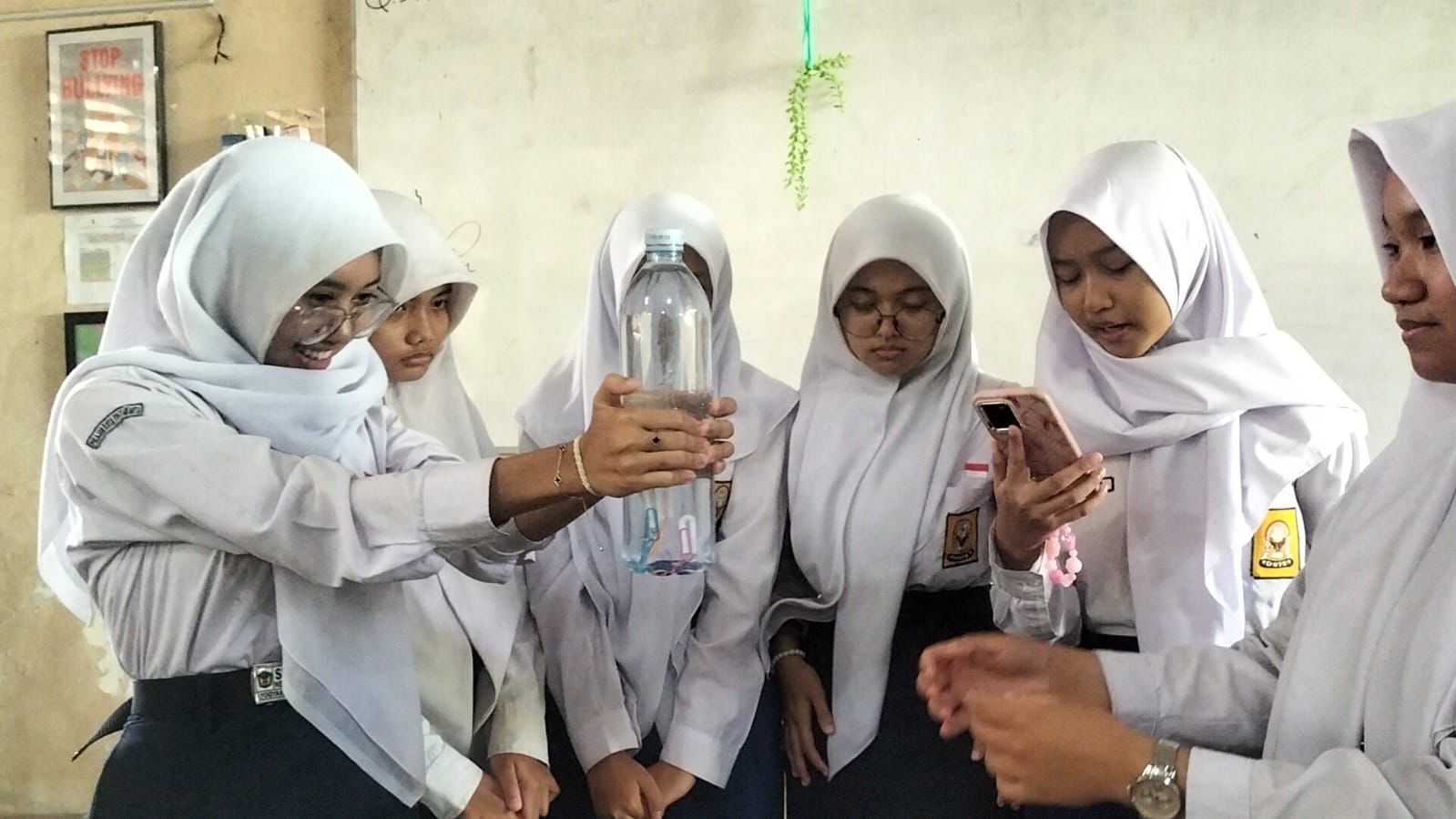
Yogyakarta, September 12, 2026 – Transforming the quality of education through strengthening the culture of literacy, numeracy, and integrating the Science, Technology, Engineering, and Mathematics (STEM) approach based on PISA (Program for International Student Assessment) competencies, is one of the concerns of the Ministry of Primary and Secondary Education (Kemendikdasmen), this is aimed at learning innovation and strengthening student competencies in several schools in Yogyakarta. The principal of SMPN 9 Yogyakarta, Agus Margono, explained that his school implemented a Literacy and Numeracy Assistance program that specifically focused on strengthening students' abilities based on PISA competencies. "We are implementing a Literacy and Numeracy Mentoring program that focuses on strengthening students' literacy and numeracy skills based on PISA. This program is realized through the integration of Higher Order Thinking Skills (HOTS)-based questions into daily assessments and strengthening project-based learning with a STEM approach," explained Agus Margono. Agus also explained the positive impact of implementing the PISA-based program on students' mindsets and school performance. Significant changes were seen in students' thinking patterns and critical thinking. Students were no longer simply memorizing material but were able to analyze environmental and social issues around them using logical and mathematical approaches. "This has a direct impact on improving National Assessment achievement scores on school literacy and numeracy indicators, as well as increasing the number of students achieving success in science and technology competitions," Agus said. Agus added that in optimizing STEM-based learning, SMP Negeri 9 Yogyakarta also facilitates teacher capacity building through internal Learning Communities and in-house training on interactive teaching modules, as well as encouraging collaboration across subjects such as Science, Mathematics, and Informatics. "The school implements differentiated learning and peer mentoring among teachers to address the challenges of varying levels of student initial readiness and changes in teaching patterns from conventional methods," he explained. Meanwhile, SMAN 5 Yogyakarta held an Integrated Literacy program covering various essential literacy areas, including digital literacy, cultural and civic literacy, science literacy, financial literacy, and numeracy literacy. This activity was designed to comprehensively equip students with 21st-century skills. Rizky Puspitadewi, Deputy Principal for Curriculum at SMAN 5 Yogyakarta, explained that literacy reinforcement goes beyond weekly practice; it is also systematically integrated into learning evaluations. This includes the habit of writing and completing literacy and numeracy-based questions in every school assessment. "The tangible impact of the consistent implementation of the literacy program and the habituation of assessment is evident in the School Education Report indicators, where achievements in the Literacy and Numeracy domains have consistently recorded and maintained the best scores," Dewi said. Dewi explained that improving teacher competency is also a concern, this is realized through various training such as the Implementation of STEM Learning, Deep Learning, Coding and Artificial Intelligence which is supported by the provision of media and project teaching materials. "In addition to improving pedagogical and technical competencies, the school concretely supports classroom operations by providing a variety of learning media and supporting teaching materials relevant to STEM projects," Dewi explained. In addition to focusing on academic achievement, SMAN 5 Yogyakarta also places significant emphasis on developing students' soft skills and character through co-curricular and extracurricular activities. In the co-curricular pathway, reinforcement is provided through projects with themes such as Engineering & Technology and Entrepreneurial Innovation. In this activity, students are trained to think critically and creatively through live brainstorming sessions with experienced speakers in their fields. Meanwhile, in the extracurricular activities, students' interests and skills in innovation, collaboration, and problem-solving are specifically channeled through the Youth Scientific Group (KIR) and the Robotics Club. The Minister of Primary and Secondary Education, Abdul Mu'ti, emphasized that the Ministry of Education and Culture continues to strengthen the transformation of education quality through an In-Depth Learning approach that encourages a more mindful , meaningful , and joyful learning process. This approach is supported by strengthening teacher competencies in the fields of AI, coding , STEM, and character education, developing educational data governance, revitalizing educational units, and utilizing more interactive learning technology.*** (Author: Morecka / Editor: Denty / Documentation: Ministry of Education and Culture Team) Bureau of Communication and Public Relations Website: kemendikdasmen.go.id #QualityEducationforAll


Secretariat General
Ministry of Primary and Secondary Education
X: x.com/Kemdikdasmen
Instagram: instagram.com/kemendikdasmen
Facebook: facebook.com/kemendikdasmen
YouTube: Ministry of Education and Culture
Questions and Complaints: ult.kemendikdasmen.go.id
Press Release from the Ministry of Primary and Secondary Education: kemendikdasmen.go.id/pencarian/siaran-pers
#MinistryOfEducationAndEducationFriendly
Attachment
Press Release 802 - PISA-Based Learning Innovations and STEM Integration Drive Educational Transformation in Yogyakarta Schools
Download File
Source: Siaran Pers Kementerian Pendidikan Dasar dan Menengah Nomor: 802/sipers/A6/IX/2026
Writer: Morecka
Editor: Denty Anugrahmawaty
 PaudDikdasmen
Badan Bahasa
Dinas Pendidikan
Ruang Murid
Ruang GTK
Guru Dikdasmen
Murid Dikdasmen
Mitra Dikdasmen
Penguatan Pendidikan Unggul, Literasi, Numerasi dan Sains Teknologi
PaudDikdasmen
Badan Bahasa
Dinas Pendidikan
Ruang Murid
Ruang GTK
Guru Dikdasmen
Murid Dikdasmen
Mitra Dikdasmen
Penguatan Pendidikan Unggul, Literasi, Numerasi dan Sains Teknologi