



Find information about the Ministry of Education and Culture, organizational structure, and regulations.
Profile Information of Kementerian Pendidikan Dasar dan Menengah
Public Information of Kementerian Pendidikan Dasar dan Menengah
Find news, press releases, announcements, and official documentation from Kemendikdasmen
 Home
Profile
Home
Profile
Find information about the Ministry of Education and Culture, organizational structure, and regulations.
About Us
Profile Information of Kementerian Pendidikan Dasar dan Menengah
Profiles of Officials
Public Information
Public Information of Kementerian Pendidikan Dasar dan Menengah
LHKPN Report
Laporan Moch. Abduh
Laporan LHKPN Fajar Riza Ul Haq
Laporan LHKPN Atip Latipulhayat
Laporan LHKPN Suharti
Laporan Abdul Mu'ti
Laporan Faisal Syahrul
Laporan Nunuk Suryani
Laporan Gogot Suharwoto
Laporan Tatang Muttaqin
Laporan Toni Toharudin
Laporan Hafidz Muksin
Laporan Biyanto
Laporan Mariman Darto
Laporan Didik Suhardi
Laporan Muhammad Muchlas Rowi
Laporan Ma'ruf
Laporan Rita Pranawati
Publication
Find news, press releases, announcements, and official documentation from Kemendikdasmen
PPID
Students at State Senior High School 2 Surabaya Create Various Solutions by Learning STEM from Surrounding Problems


Published on: 8 September 2026
Share:
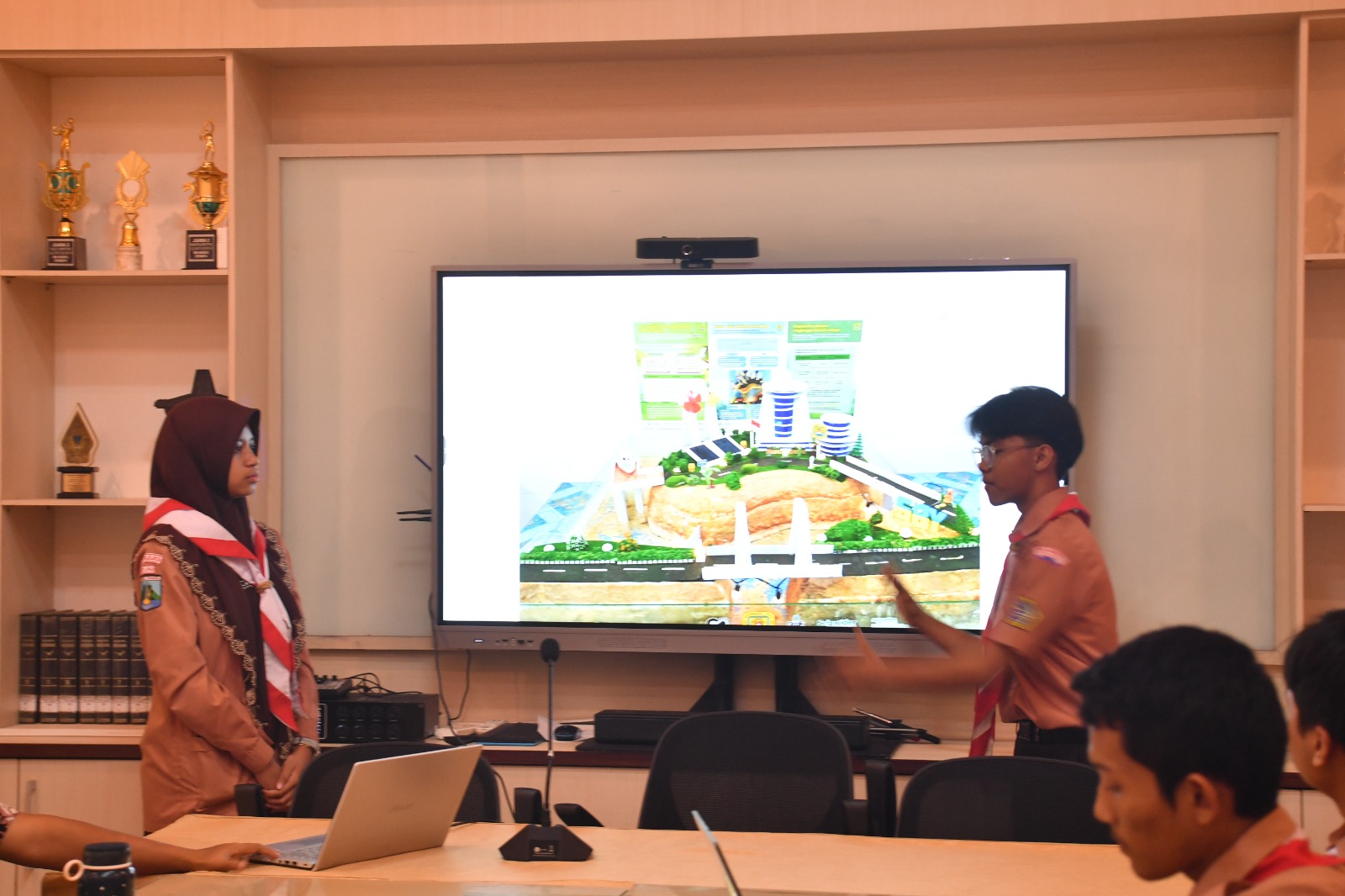
Surabaya, September 8, 2026 — STEM ( Science, Technology, Engineering, and Mathematics ) learning doesn't always present complex material. The Ministry of Primary and Secondary Education (Kemendikdasmen) is promoting the implementation of STEM as an approach that encourages students to be sensitive to environmental issues and use their knowledge to find solutions. In the program run by the Ministry of Primary and Secondary Education, the implementation of STEM in learning is aimed at building a school culture that encourages students to dare to try, be creative in creating, test and improve, and try again. This process is expected to shape a superior generation of Indonesians capable of facing the various challenges of the future. At SMA Negeri 2 Surabaya, STEM is implemented through lessons that are relevant to students' lives, from environmental issues to the use of technology. Students are encouraged to observe problems, find solutions, try, evaluate, experiment, and design products. For example, Neny Else Josephine, a physics teacher at Surabaya State High School 2, has developed a fun learning experience utilizing digital technology. Using various simple devices and artificial intelligence (AI), she encourages students to develop their own game-based physics simulators to explain physics concepts. "They used very simple, free tools available online, but the results were beyond expectations. The children went much further in exploring the physics concepts developed in the virtual lab," said Neny. Through this project, students not only deepened physics concepts but also developed their ability to explain and present their work. One 12th-grade student, Reynaldo, developed a product in the form of an interactive website. "This interactive page allows us to explore physics topics that aren't available on some online tools . So, in addition to improving understanding, we're also adding new tools that are open to the public and can be shared," said Reynaldo. The application of STEM is also evident in projects addressing environmental issues. Nimas Izmi Aufa, a mathematics teacher at SMA Negeri 2 Surabaya, integrated mathematics and physics through a project to design a miniature city based on renewable energy. He explained that STEM is not taught as a standalone subject but is implemented through a contextual approach that encourages students to understand problems and seek solutions. "Children become more critical when dealing with or reading things. Their literacy skills also improve. Because they are presented with real, contextual problems, they are eager to read and research," explained Nimas. The project was developed by Ananda Aqila Zahir Diptyo, a grade XI student, which started from the problem of pollution and limited land in Surabaya. He designed the concept of a miniature reclamation island that could serve as a source of renewable energy and an urban forest to absorb carbon dioxide. His interest in environmental issues grew in junior high school through his involvement in environmental organizations in Surabaya and East Java. Through this project, he felt more free to express his ideas and find solutions to problems close to his daily life. Another environmental issue was raised by Khalisha Zahratus Syita through the "Morico" project, a water management system that stems from the limited access and management of water in villages. In this project, rainwater is collected for daily needs and then channeled into a settling pond using moringa seeds as a biocoagulant. After going through a filtration process, the water is monitored using pH and turbidity sensors before being used for watering plants and cultivating catfish. "Because I have an interest in engineering , I enjoy environmental issues that I can solve. When I encounter a problem and find a solution, I feel happy," said Khalisha. Bahrul Ulum, a chemistry teacher at Surabaya State High School 2, said the projects stemmed from students' interest in the environmental conditions around them, which they then linked to green chemistry material, including the principles of waste prevention. He said real-world problem-based learning helps students see the benefits of the knowledge they're learning while fostering a sense of ownership and interest in learning. The implementation of STEM in schools demonstrates that learning can be more meaningful when knowledge is connected to real-life situations. Through various projects, students not only understand academic concepts but also learn to identify problems, develop ideas, and generate solutions for their surroundings.*** (Writer: Stephanie / Editor: Rany / Photographer: Yuswan Rosepi) Bureau of Communication and Public Relations


Secretariat General
Ministry of Primary and Secondary Education
Website: kemendikdasmen.go.id
X: x.com/Kemdikdasmen
Instagram: instagram.com/kemendikdasmen
Facebook: facebook.com/kemendikdasmen
YouTube: Ministry of Education and Culture
Questions and Complaints: ult.kemendikdasmen.go.id
Press Release from the Ministry of Primary and Secondary Education: kemendikdasmen.go.id/pencarian/siaran-pers
#QualityEducationForAll
#MinistryOfEducationAndEducationFriendly
Source: Siaran Pers Kementerian Pendidikan Dasar dan Menengah Nomor: 795/sipers/A6/IX/2026
Writer: Stephanie Westiana
Editor: Denty Anugrahmawaty
 PaudDikdasmen
Ruang Murid
Ruang Sekolah
Murid Dikdasmen
Penguatan Pendidikan Unggul, Literasi, Numerasi dan Sains Teknologi
PaudDikdasmen
Ruang Murid
Ruang Sekolah
Murid Dikdasmen
Penguatan Pendidikan Unggul, Literasi, Numerasi dan Sains Teknologi