



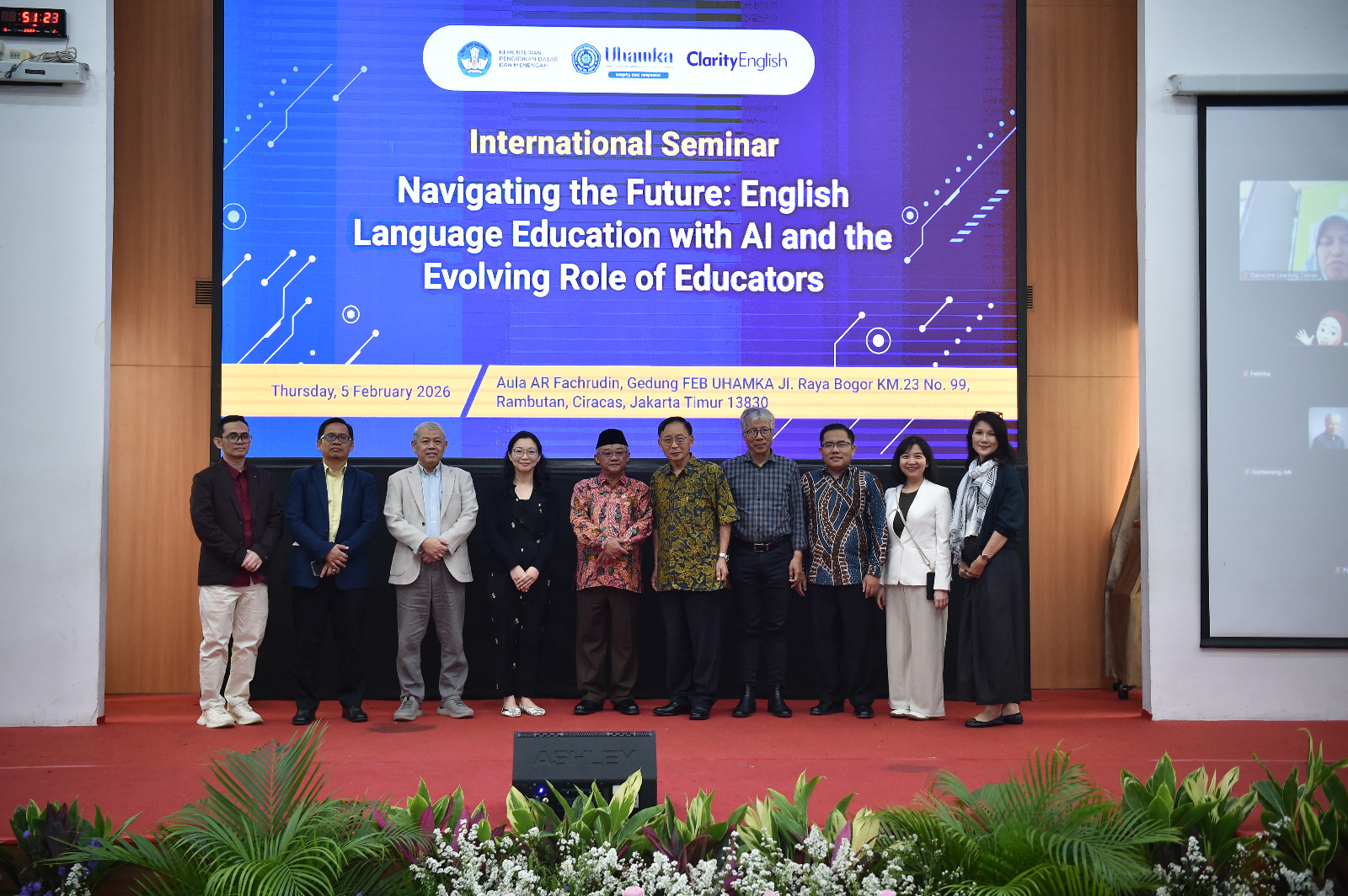
Jakarta, February 5, 2026 – Amidst the rapid development of artificial intelligence (AI), education is faced with a new challenge: ensuring that technology strengthens the quality of learning without eroding human values. This issue was the main focus of the Minister of Primary and Secondary Education (Mendikdasmen), Abdul Mu'ti, at an international seminar with the theme Navigating the Future: English Language Education with AI and the Evolving Role of Educators held at Muhammadiyah Prof. Dr. HAMKA University (UHAMKA), Jakarta, Thursday (5/2).
The Minister of Primary and Secondary Education emphasized that AI should be positioned as a learning support tool, not a substitute for the role of humans in education.
"AI is a product of machine learning , algorithms, and technology. It is simply a tool. Education remains about building human character that cannot be replaced by technology, humans who are capable of controlling technology and using technology for the benefit of others and the well-being of our planet," said Minister Abdul Mu'ti in his remarks.
In the seminar, which featured language education experts from various countries, the Minister of Primary and Secondary Education also highlighted the urgency of strengthening English language learning from elementary school. Starting in 2027, English is planned to be a compulsory subject starting in the third grade. This policy aims to equip students with the skills to communicate and interact globally from an early age.
He added that English learning needs to be geared toward a deep learning approach that encourages understanding, not just memorization. Learning experiences must be designed to be more active, contextual, and meaningful so that students can use the language in real life.

This international seminar featured language education experts from the UK and Taiwan, discussing the changing landscape of English language learning due to the emergence of generative technology. The discussion highlighted the importance of critical literacy, ethics, and the role of teachers as learning facilitators amidst the abundance of AI-generated content.
The diverse perspectives of international speakers at this seminar reinforce the conclusion that AI does not diminish the importance of language education. Herri Mulyono, Professor of English at UHAMKA, explained in his study that the integration of AI in English learning should not shift the role of teachers from mere transmitters of material to facilitators of critical thinking, ethical reflection, and cultural awareness. He also warned against the risks of over-reliance on AI and the importance of strengthening teachers' professional identity.
Meanwhile, Andrew Stokes, founder of ClarityEnglish (UK), in a presentation based on research and classroom practice, emphasized that AI should be utilized to support micro-learning tasks, such as assessments, personalized materials, and vocabulary enrichment. However, he emphasized that human relations, classroom management, and character building remain areas where technology cannot replace them.
From a global perspective, Yinghuei Chen, Professor Emeritus of Taiwan's Asia University, highlighted that the advent of generative AI actually increases the urgency of English language education. In his research, he emphasized that amidst the abundance of machine-generated text, the ability to read critically, interpret meaning, and understand cross-cultural contexts are key competencies that must be developed through language education.
This view is complemented by lecturer and expert educator Anuncius Gumawang Jati, who emphasizes a pedagogy-first approach to the use of AI. Through his pedagogical studies, he asserts that technology should follow educational goals, not the other way around, and be used to strengthen equity, authenticity of learning, and teacher agency.
Through this international seminar, the Ministry of Education and Culture affirmed its commitment to continuing its involvement in global dialogue on education in the AI era. Cross-border, interdisciplinary collaboration is expected to enrich English language learning policies and practices in Indonesia, while maintaining human-centered education.
"We hope that today's seminar, through the papers and discussions presented, can enrich and provide meaningful contributions to the world of education, especially in the Ministry of Primary and Secondary Education. We are very pleased that this program can contribute to improving English learning in schools, and in the long term, to improving the quality of national education," concluded Minister Abdul Mu'ti in closing his speech.*** (Writer: Uly / Editor: Denty A., Seno H., / Photographer: Shaka)
Bureau of Communication and Public Relations
Secretariat General
Ministry of Primary and Secondary Education
Website: kemendikdasmen.go.id
X: x.com/Kemdikdasmen
Instagram: instagram.com/kemendikdasmen
Facebook: facebook.com/kemendikdasmen
YouTube: Ministry of Education and Culture
Questions and Complaints: ult.kemendikdasmen.go.id
Press Release from the Ministry of Primary and Secondary Education: kemendikdasmen.go.id/pencarian/siaran-pers
#QualityEducationforAll
#MinistryofEducationAndEducationFriendly