



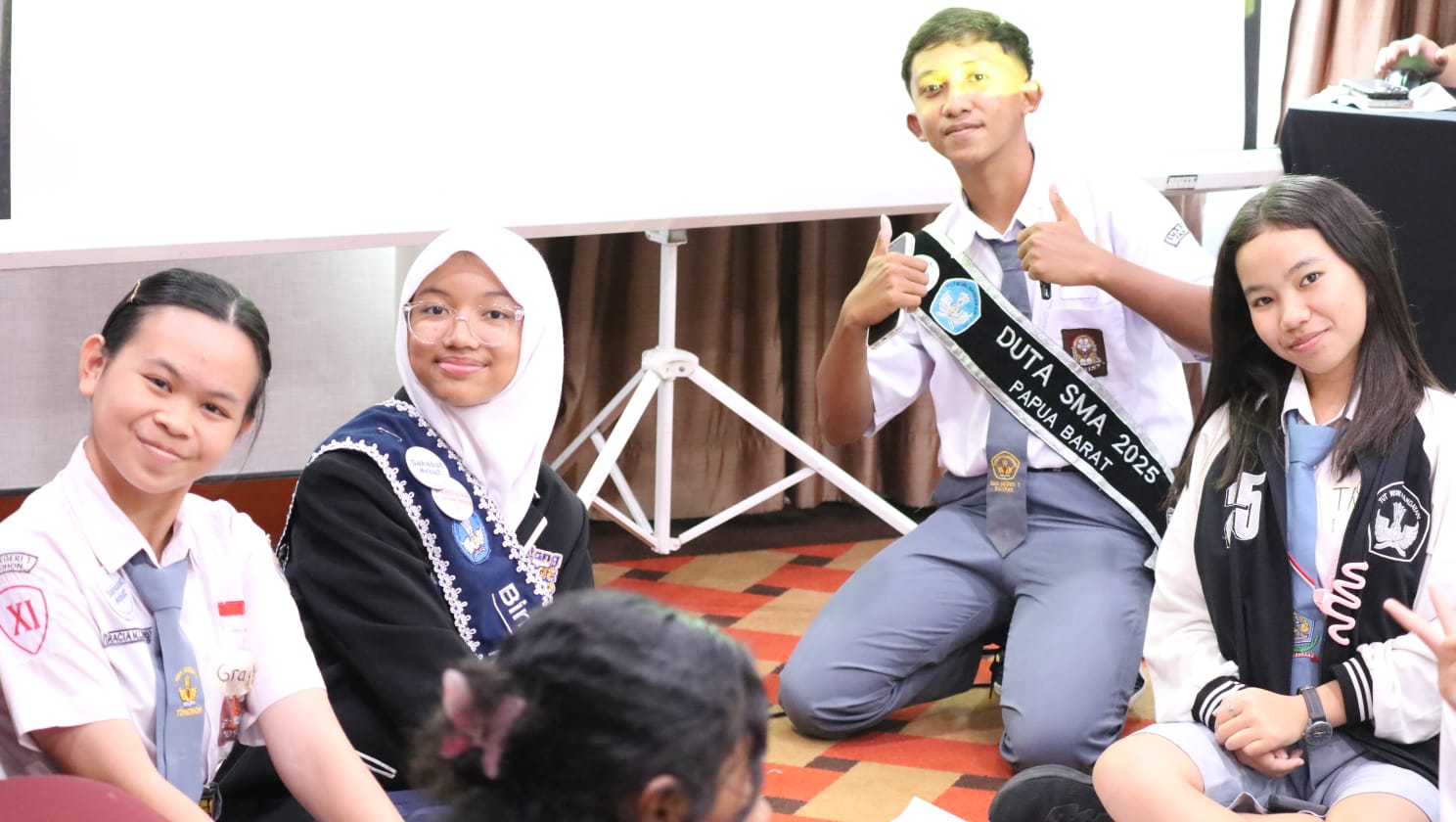
Jakarta, December 11, 2025 — The Ministry of Primary and Secondary Education (Kemendikdasmen), through the Character Strengthening Center, is implementing a strengthening activity to strengthen the #RukunSamaTeman Movement, an initiative that encourages students to support each other through peer mentoring. This program is driven by student change agents called Sahabat Hebat (Great Friends), which is attended by student representatives from each school from various provinces in Indonesia to identify themselves and develop their potential.
Sahabat Hebat plays a role in fostering a positive culture among students. Students are trained to listen to each other, respect each other, and have the courage to alert peers if they experience potentially harmful behavior. This activity is divided into six classes to ensure a more focused and interactive learning process.
In her presentation, Lilis Hayati, Facilitator of the Character Strengthening Center, explained that Sahabat Hebat exists to foster healthier friendships. "This movement was created in response to situations frequently encountered in schools, such as teasing, behavior that ignores feelings, following along without thinking, difficulty saying no politely, cyberbullying, and many students who keep their problems to themselves," she said in Jakarta (11/12).
He highlighted the reality on the ground that some students still feel alone, afraid to speak up, or have experienced verbal, physical, or digital violence but don't know who to talk to. "Therefore, Sahabat Hebat is designed to provide a safe space and peer support," he said. This movement involves all students, classmates, cross-grade friends, peers, teachers, and facilitators, with an emphasis on the students themselves being the primary pioneers.
In the first session, the Great Friends were equipped with the principles of positive friendship: listening with empathy, respecting friends' feelings, preventing bullying, politely reprimanding others, and encouraging others to build a healthier school environment. Lilis emphasized that these values must become daily habits. "Great Friends must be present everywhere: in class, in the cafeteria, in the school hallways, even on social media. This movement takes place every day, not just during activities," she explained.
One participant, Andi Aisyah Mughny Sakilah from SMPN 9 Penajam Paser Utara, East Kalimantan, said she gained a new understanding of how to respond to situations that lead to unsafe behavior. "I learned that when we see behavior that could hurt a friend's feelings, we must have the courage to say 'stop.' It's a simple but important way to protect and care for our friends," she said.
In the discussion session, participants discussed the technical implementation in their respective schools, including the formation of peer groups between students and teachers, the mechanism for showcasing talents amidst busy schedules, the application of cases in the fourth material up to the roleplay stage, and trauma mitigation through the provision of quiet corners and teacher mentoring.
Self-Knowledge & Potential Development
In addition to building healthy social relationships, Great Friends receive training in Self-Awareness and Potential Development. This material is crucial for agents of change to understand themselves before assisting others.
Lilis explained that self-understanding makes Sahabat Hebat more confident in carrying out their roles. "The more they know themselves, the stronger they become as agents of change. They become more emotionally stable, more patient, and wiser in helping their friends," she said.
Through this activity, it is hoped that the participants will continue to implement positive friendship values in their respective schools. The habit of listening to each other, respecting friends' feelings, and looking out for one another is an important foundation for the #RukunSamaTeman Movement to run every day and help create a safe, comfortable, and harmonious learning environment for all students. (Author: Ikke, Intan) Photographer: Puspeka