



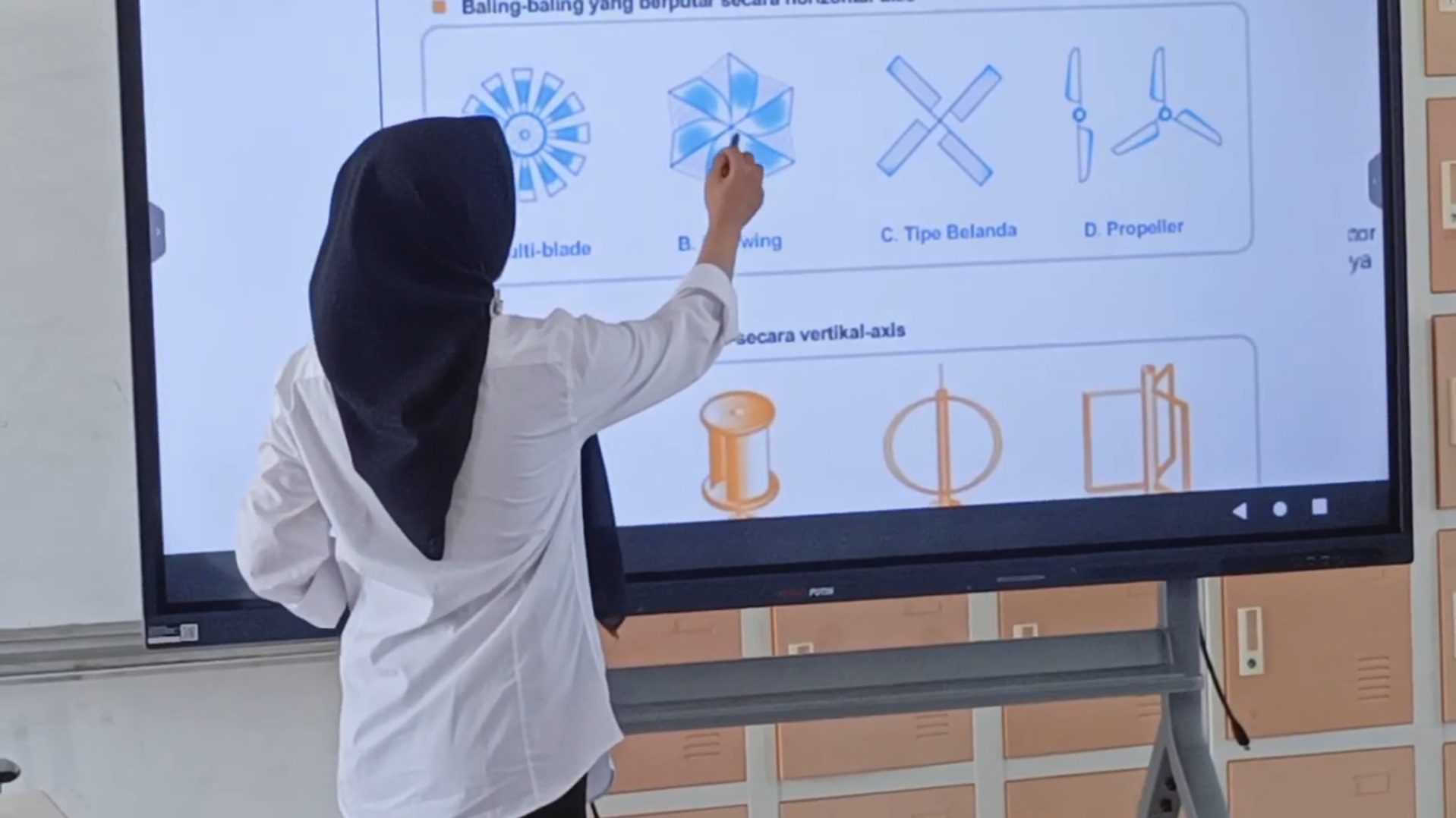
Central Buton, Southeast Sulawesi, Ministry of Elementary and Secondary Education - The strong winds blowing around SNT 15 Central Buton have become a learning resource for students. Using this potential, they explore renewable energy by building a miniature wind power plant (PLTB), assembling it using available materials, and measuring the resulting electric current using a multimeter.
The principal of SNT 15 Buton Tengah, Meijody Maxi Umboh, said that the implementation of Science, Technology, Engineering, and Mathematics (STEM) at his school will only begin at the end of September 2026. The implementation is still adjusted to the students' basic abilities and the availability of facilities and infrastructure at the school.
According to Meijody, this approach is expected to bring learning closer to students' real-life experiences. Lessons won't stop at memorization, but will become engaging and rewarding experiences while encouraging the development of critical-analytical, creative-innovative, collaborative, and problem-solving skills. "The implementation of this approach is expected to transform learning into more than just memorization, but also into engaging and rewarding real-life experiences," Meijody said.
To support STEM implementation, the school utilizes a daily reflection period in the afternoon after lessons. In addition to discussing SNT programs and practical issues that arise daily, the forum is used to explain STEM implementation, share best practices, and coordinate resource needs with the transition team.
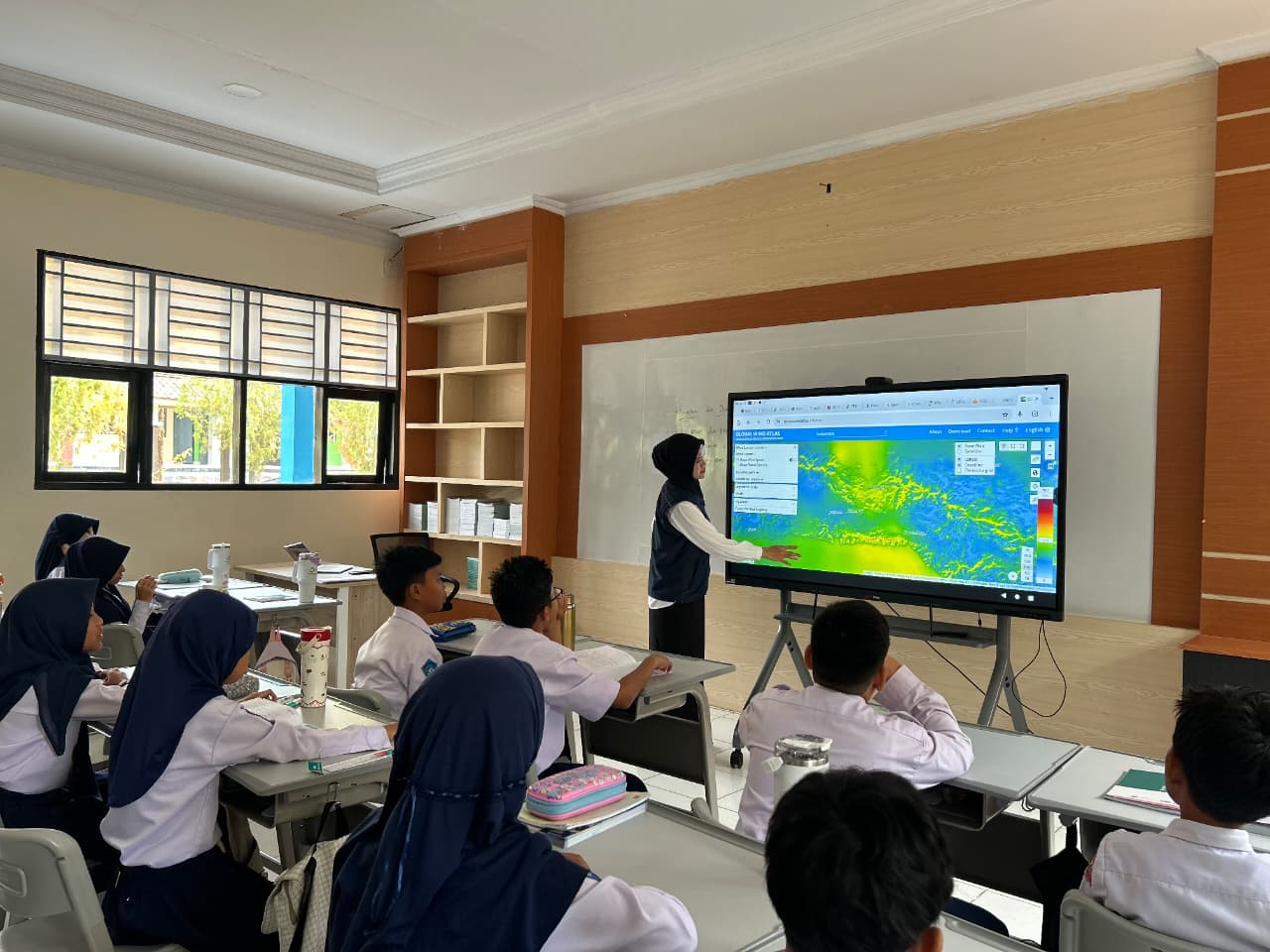
This reflection activity later developed into an internal learning community at the school. For Meijody, sharing space between teachers is a crucial part of supporting the ongoing development of learning. One such learning experience was conducted by Jumyany Syntha Maola Ketika, a teacher at SNT 15 Central Buton. The lesson began with the impact of carbon emissions on the environment and the energy potential available in the local area.
Students were then invited to explore the potential uses of renewable energy. The potential of wind, waves, and solar energy was discussed before the students and their teacher chose a miniature wind power plant project. "The starting point is really the energy issue, linking it to local energy potential that can be utilized," explained Jumyany.

During the learning process, students are first introduced to concepts. They then complete initial worksheets to understand how to use and read measuring instruments. Students are also trained to follow scientific procedures through measuring objects in their environment.
After gaining an initial understanding, students began designing miniature wind power plants using recycled materials. They then measured the resulting electrical potential using a digital multimeter, demonstrating their measurement skills in everyday life.
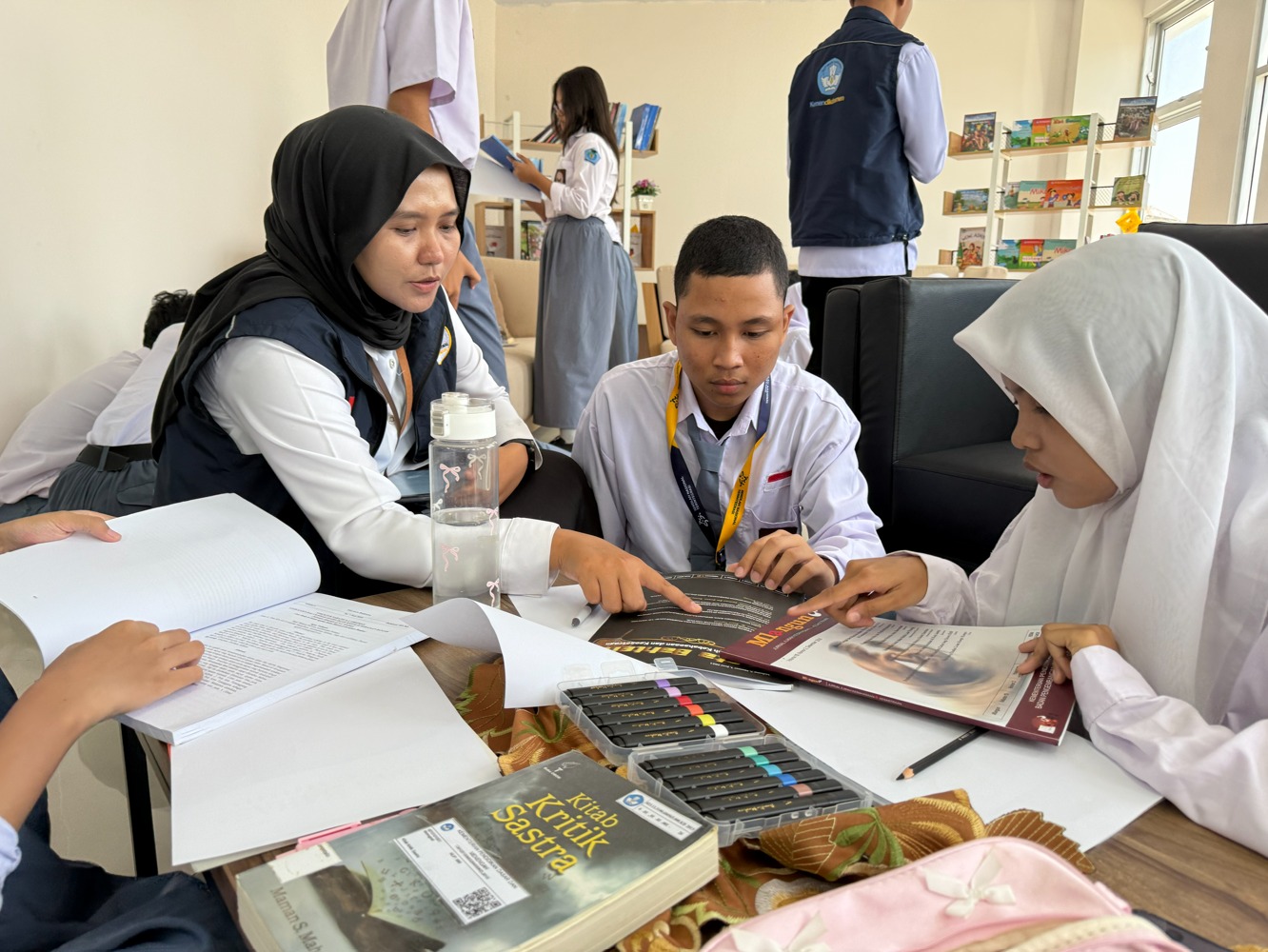
For Jumyany, this process provides students with the opportunity to not only understand concepts but also apply them through their work. When faced with a problem, students are encouraged to seek information and determine how to solve it.
Some students experienced difficulties assembling the miniature wind power plant because they were unfamiliar with the equipment. They then conducted a brief literacy study to identify the devices and understand their uses. "By connecting STEM learning to local problems and then providing engineering-based problem-solving, students' motivation to learn is greatly increased," said Jumyany.

According to him, the learning process is beginning to show changes in students. They appear more active, independent, and critical. Students also participate in activities with pleasure and enthusiasm, while the results of the products and assessments show satisfactory results.
Junita Gresya Kepe, a student at SNT 15 Central Buton, experienced this firsthand. In the project, Junita and her classmates assembled a miniature wind power plant and measured the resulting electric current using a multimeter.
Junita said the project was chosen because the area around the school has potential for wind energy. Amidst energy shortages, strong winds offer a potential source of energy that can be explored and utilized. "We built a miniature wind farm because, in the current energy shortage, the area around the school has wind energy potential due to the strong winds," Junita said.
For Junita, assembling miniatures and measuring electric current using a multimeter are her favorite parts. She also appreciates the difference between learning through theory and learning with a STEM approach. "Traditional learning is more theoretical, but with STEM, we gain both theoretical and practical understanding for life," she said.
The process wasn't always easy. Junita said her group had difficulty finding the materials for the dynamo. However, they chose to discuss and help each other find the necessary materials.
From this activity, Junita gained knowledge about renewable energy, particularly wind energy. She also feels her technical skills have developed through the experience of assembling tools and taking measurements using a multimeter. "My knowledge of renewable wind energy and my technical skills in assembling tools and taking measurements using a multimeter," Junita said.
For SNT 15 Buton Tengah, STEM implementation remains an ongoing process. The school strives to adapt learning to the students' circumstances and available resources, while fostering a culture of sharing and learning among teachers.

Meijody hopes that STEM implementation can continue to be developed through more structured training. He also hopes that the provision of science laboratory facilities can be accelerated so that learning can be more optimal and less theoretical.
From the wind they encountered in their surroundings, students at SNT 15 Buton Tengah learned about renewable energy, designed a project, took measurements, collaborated, and found solutions when faced with difficulties. This experience demonstrated how the surrounding environment can be part of the learning process, bringing knowledge closer to students' lives. *** (Author: Irfan/Documentation: SNT 15 Buton Tengah)
Bureau of Communication and Public Relations
Secretariat General
Ministry of Primary and Secondary Education
Website: kemendikdasmen.go.id
X: x.com/Kemdikdasmen
Instagram: instagram.com/kemendikdasmen
Facebook: facebook.com/kemendikdasmen
YouTube: Ministry of Education and Culture
Questions and Complaints: ult.kemendikdasmen.go.id
Press Release from the Ministry of Primary and Secondary Education: kemendikdasmen.go.id/pencarian/siaran-pers
#QualityEducationforAll
#MinistryOfEducationAndEducationFriendly