

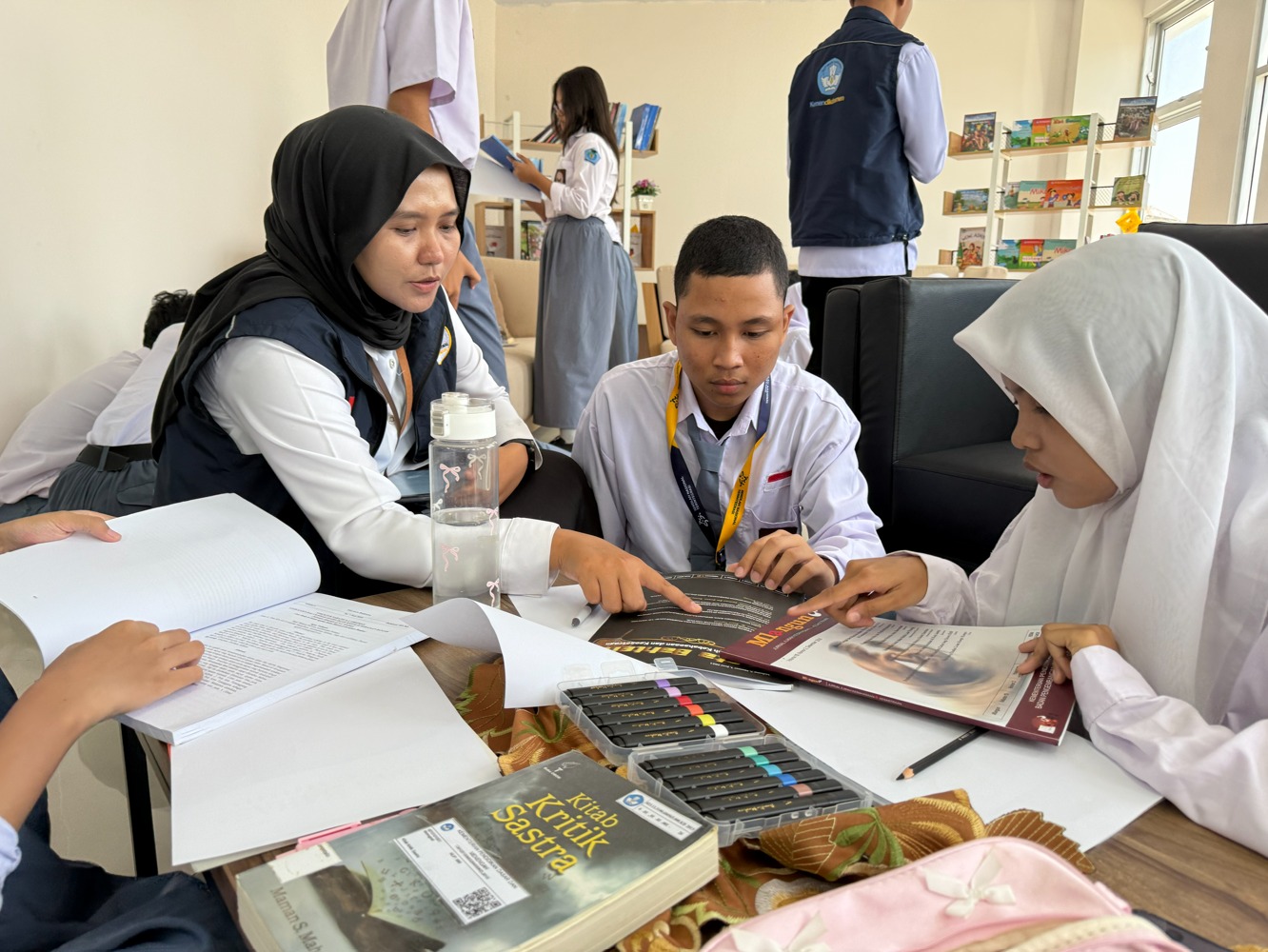
Bone Bolango, Gorontalo, Ministry of Elementary and Secondary Education - For students at SNT 6 Bone Bolango, learning about earthquakes and extreme weather is no longer limited to textbook notes. They are encouraged to step outside the classroom routine to seek information, read data, discuss issues, use technology, and design mitigation measures relevant to their lives.
This experience emerged through the "Literacy Exploration and Disaster Mitigation Simulation" project. This project stemmed from real-life challenges faced by the people of Gorontalo, particularly extreme weather and the potential for earthquakes. In the hands of teachers and students, this phenomenon became a gateway to connecting various subjects and building preparedness.
"For us, Science, Technology, Engineering, and Mathematics (STEM) is not just an abbreviation, but rather a lens for students to see the world as a whole," said Firda Aulia Shalihah, a teacher at SNT 6 Bone Bolango.
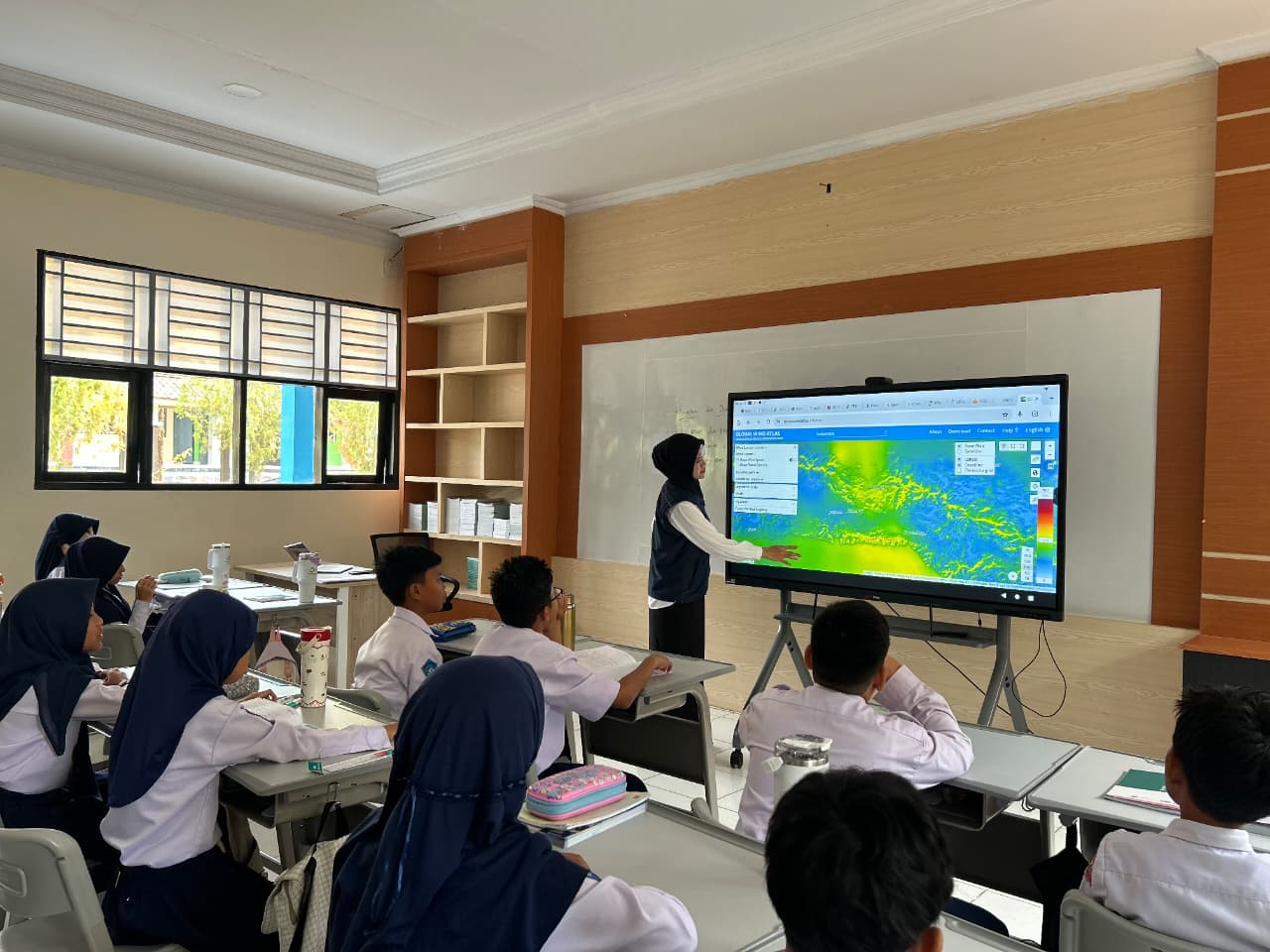
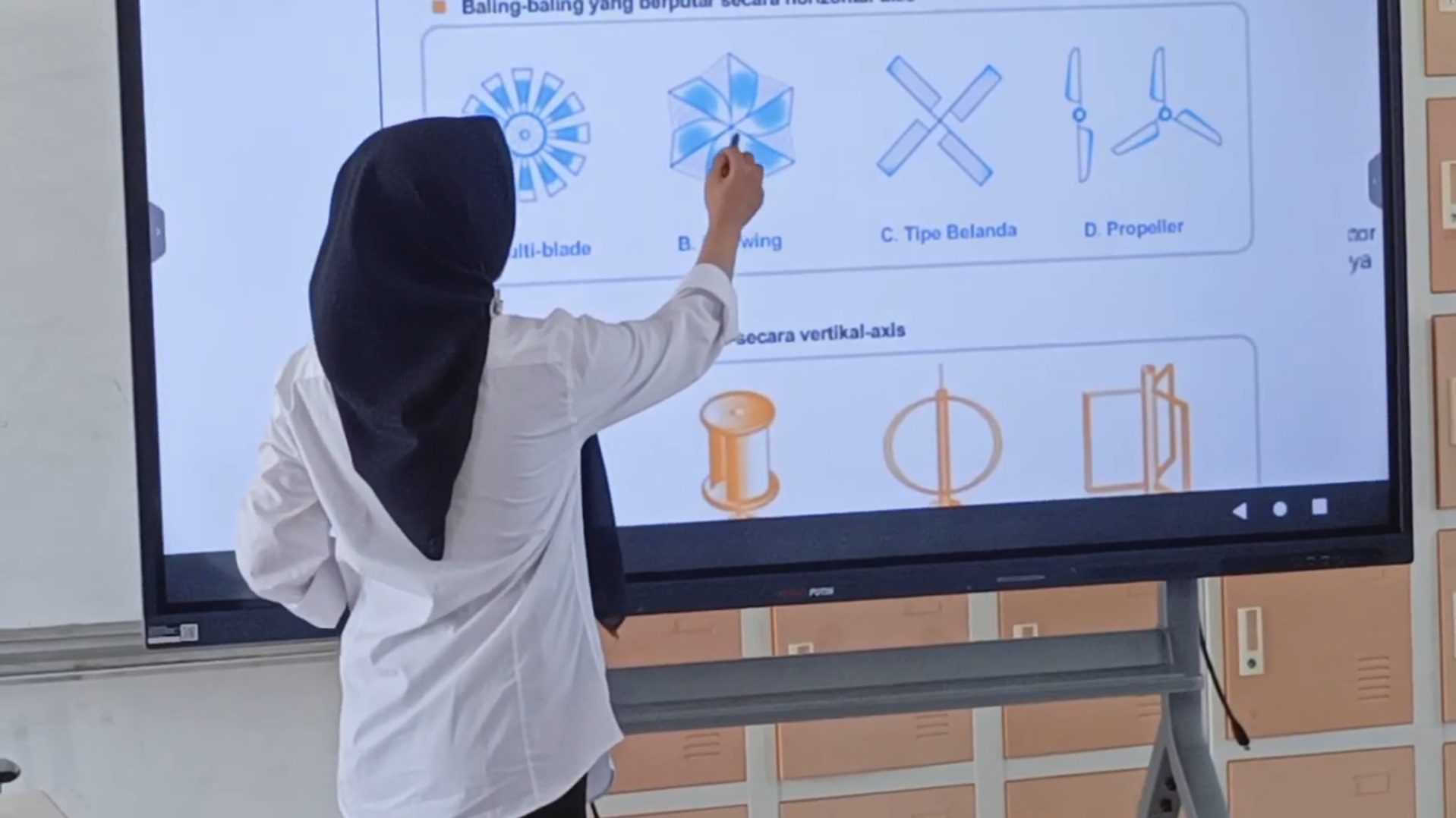
This approach makes the boundaries between subjects more fluid. Science, through geography, provides a foundation when students study climate and weather anomalies. Mathematics is introduced when they process rainfall and earthquake magnitude data from the BMKG. Engineering and Technology are used to develop mitigation plans, create digital simulations, and develop interactive mind maps. Meanwhile, Indonesian helps students convey research findings through critical book reviews.

Learning also takes students outside the classroom. They visit the Language Office Library to search for and select information sources. Afterward, they engage in direct dialogue with BMKG (Indonesian Meteorology, Climatology, and Geophysics Agency) resource persons to test and compare the information they have gathered.
For Mohammad Daffa Saputra Gobel, a 10th-grade student, the experience changed his perspective on learning. "At first, I thought learning about earthquakes and weather would just involve taking notes in class. It turned out to be so much fun! We were taken to a large library for research, and the coolest part was, we got to chat directly with the folks from the BMKG."
The closeness of the material to their immediate surroundings made the learning process feel more relevant. "Because Gorontalo happens to be experiencing frequent earthquakes, this lesson felt very relevant . We were learning something we were experiencing ourselves," said Daffa.
However, combining various knowledge into one project wasn't without its challenges. Students had to process data, write a review, and present the information in an easy-to-understand digital design. "The challenge was combining so much knowledge into one assignment. We had to think, ' How can we incorporate rainfall and earthquake data into a book review, and then create a digital mind map design that's easy for people to read?'" Daffa explained.
Differences of opinion within the group arose. However, from there, the students learned to divide roles and combine ideas. "We had disagreements in the group, but from that, we really learned how to divide tasks and combine ideas to make the project a success."
As a teacher, Firda views this process as a crucial part of learning. Therefore, she doesn't rely solely on written tests but also uses authentic assessments by observing students' courage to ask questions, analytical skills, data accuracy, and the quality of their work. "We observe their enthusiasm and courage when asking critical questions to the BMKG. We also assess their final portfolios holistically."
According to Firda, learning outcomes are seen in students' ability to connect knowledge to real-world needs. "We assess real-world work that is meaningful to their lives," Firda added.

Learning Impressions for Students
Daffa has experienced the benefits firsthand. "Now my friends and I don't panic so easily. We know exactly what mitigation steps to take in the event of sudden extreme weather or an earthquake," he said.
In addition to preparedness, the project provided new skills in using technology. "I feel really proud because our work isn't just for teachers to assess, but can also provide useful information for those around us," she said.
Meanwhile, for teachers, the biggest challenge lies in cross-subject coordination and managing the workload. The solution is to create a single project with a unified assessment rubric. "Instead of giving four different assignments, we assign just one large project at the end. Students feel the workload is lighter and the learning is much more meaningful, while we, the teachers, can still assign competency grades for our respective subjects," explained Firda.
Based on this project, STEM emerged as a learning experience that connects science, data, technology, language, and collaboration. Furthermore, students learned to understand the risks around them and transform their knowledge into readiness for action. (Documentation: SNT 6 Bone Bolango)
Bureau of Communication and Public Relations
Secretariat General
Ministry of Primary and Secondary Education
Website: kemendikdasmen.go.id
X: x.com/Kemdikdasmen
Instagram: instagram.com/kemendikdasmen
Facebook: facebook.com/kemendikdasmen
YouTube: Ministry of Education and Culture
Questions and Complaints: ult.kemendikdasmen.go.id
Press Release from the Ministry of Primary and Secondary Education: kemendikdasmen.go.id/pencarian/siaran-pers
#QualityEducationforAll
#MinistryOfEducationAndEducationFriendly